
Last updated August 25, 2026
Free on-site gate assessment - hinges, posts, and your LiftMaster or Nice gate operator checked before anything is quoted
The assessment is free and the quote is the invoice.
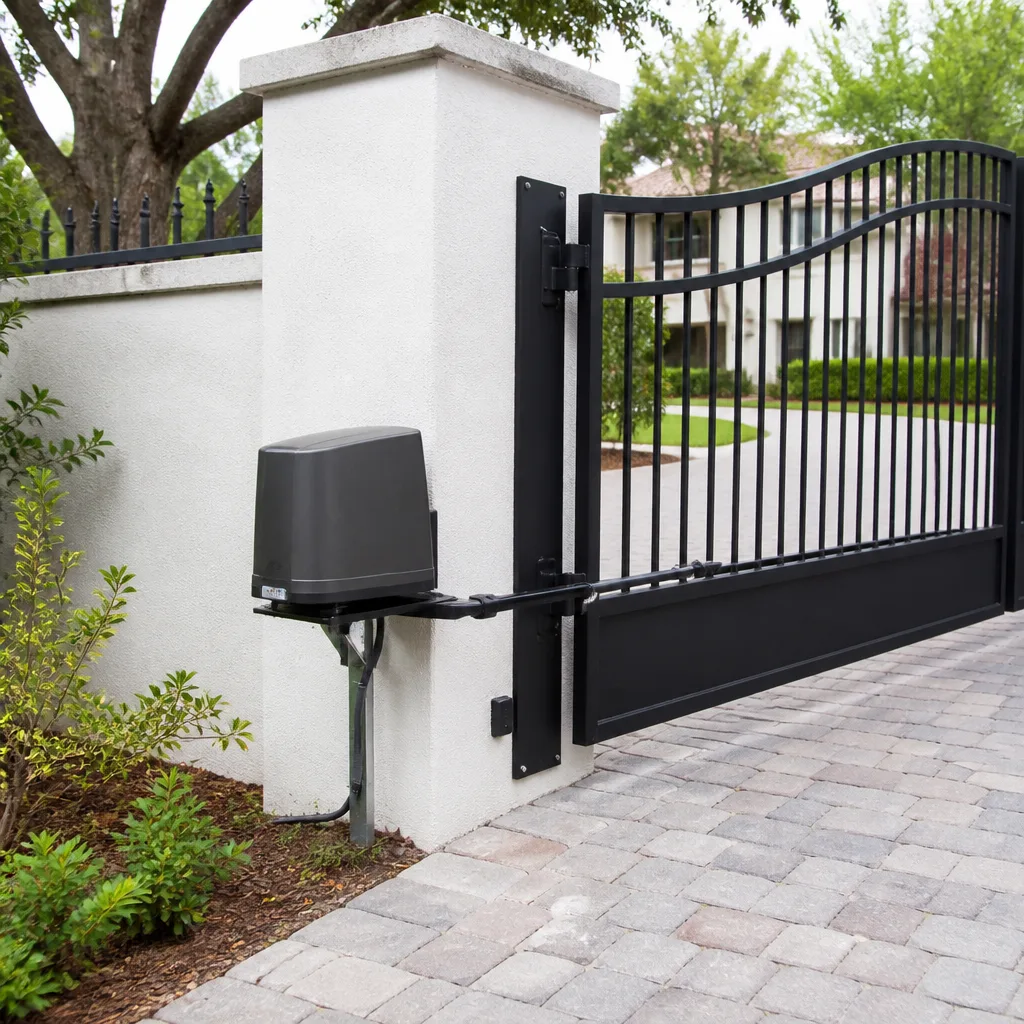
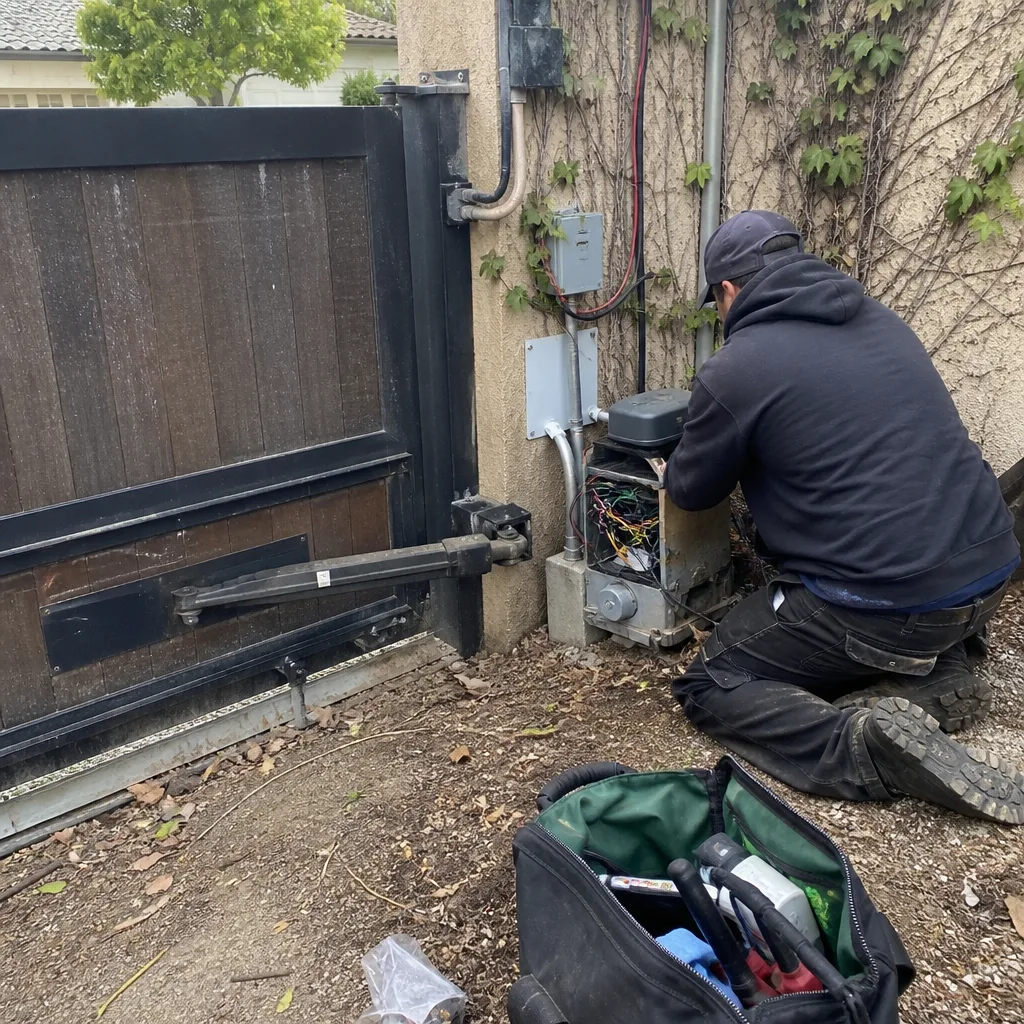 Before
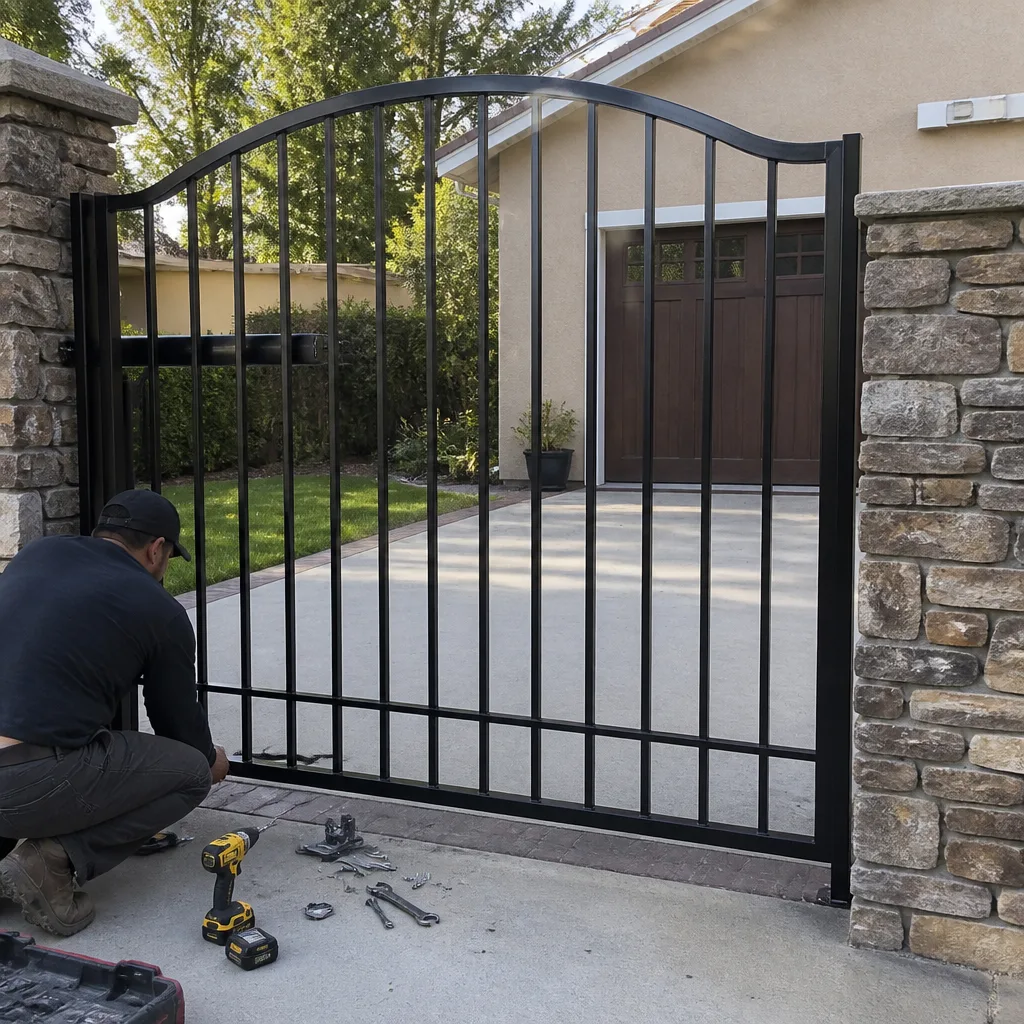 After
After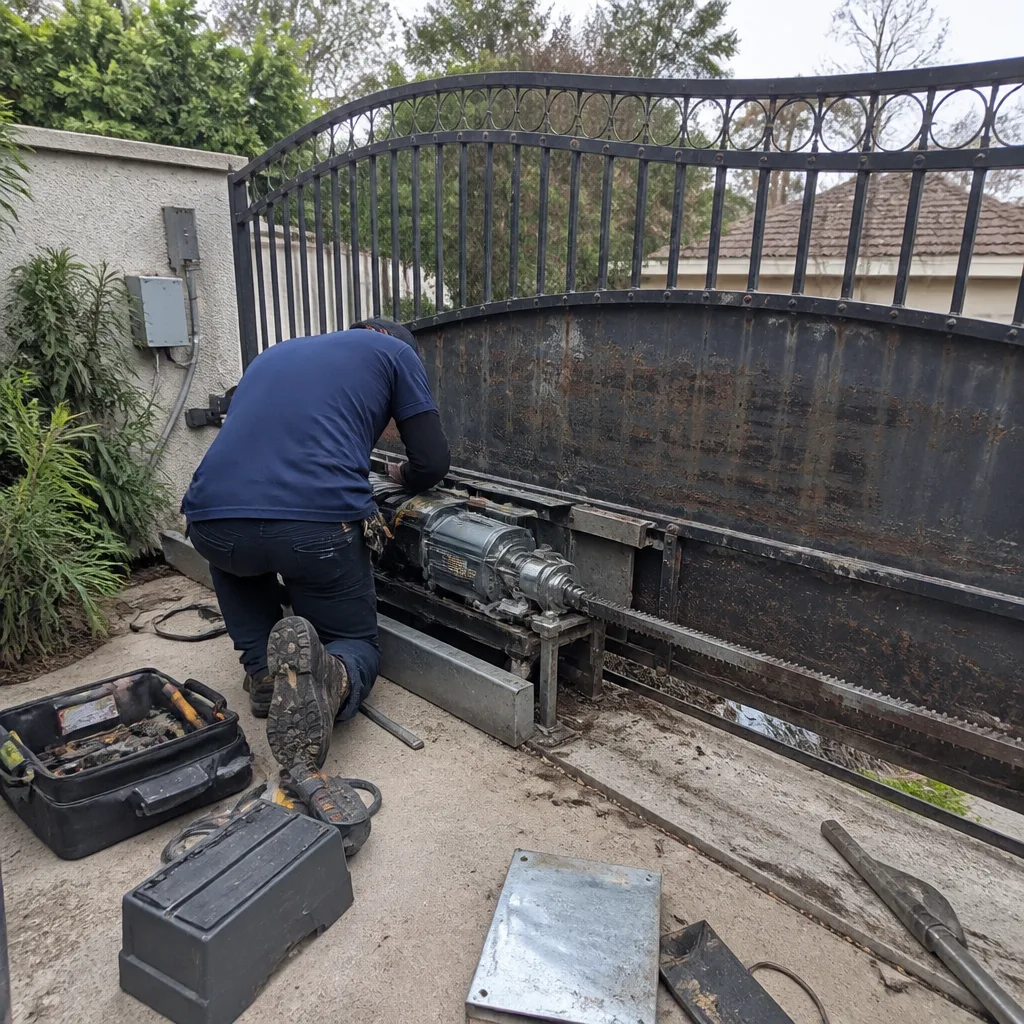 Before
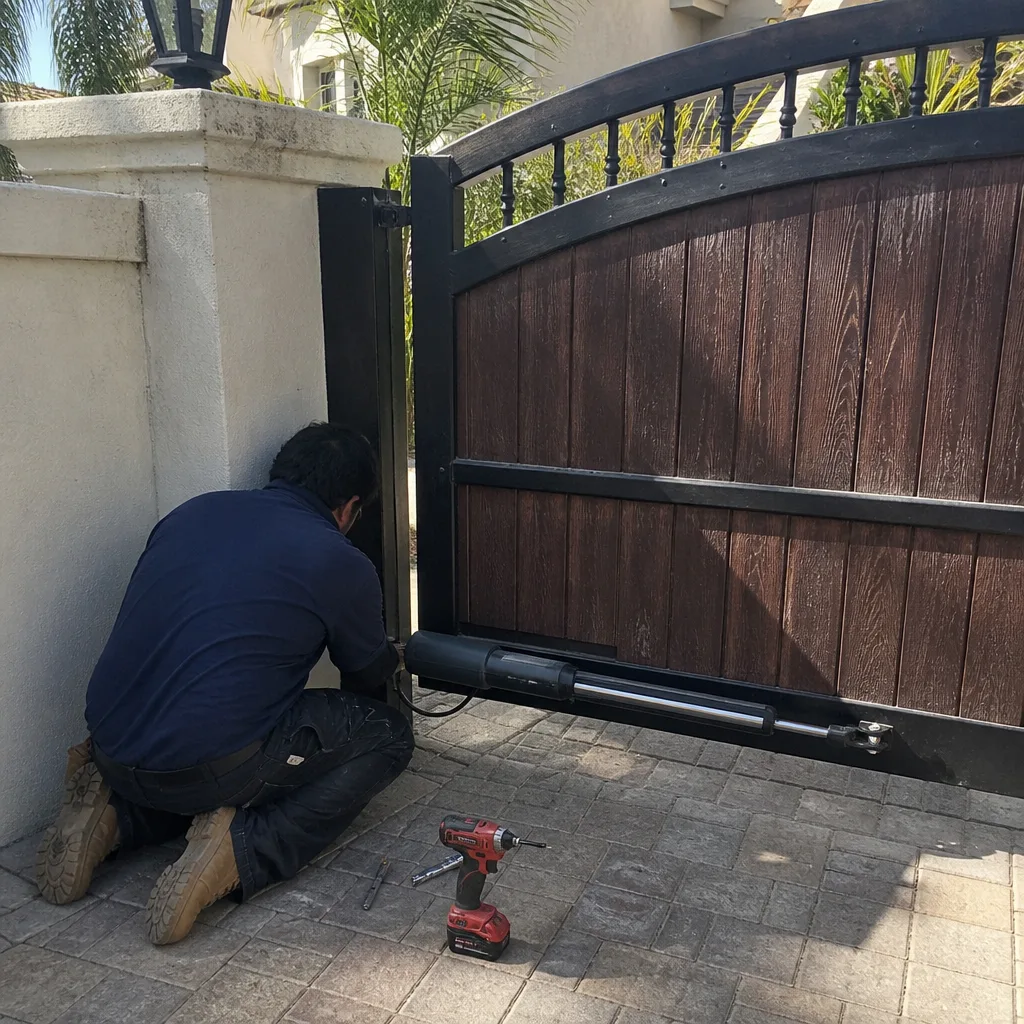 After
After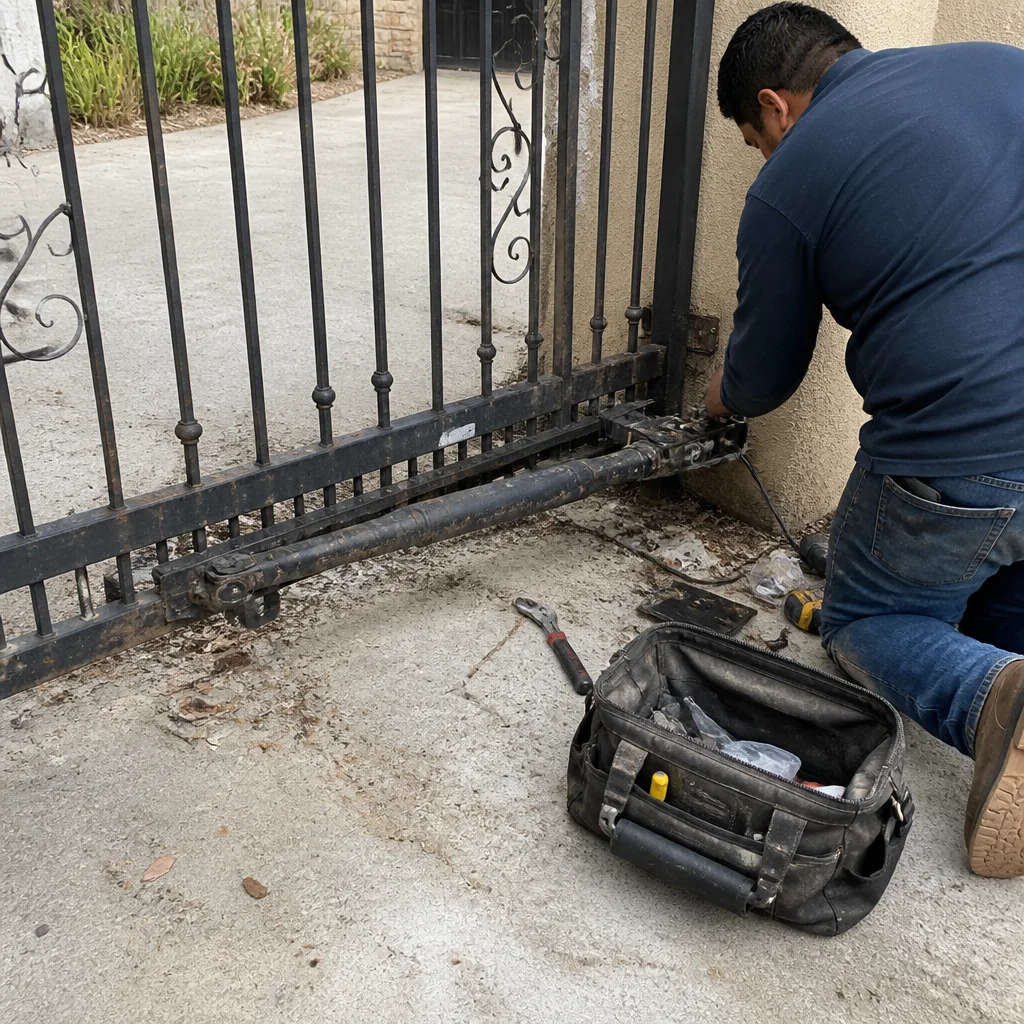 Before
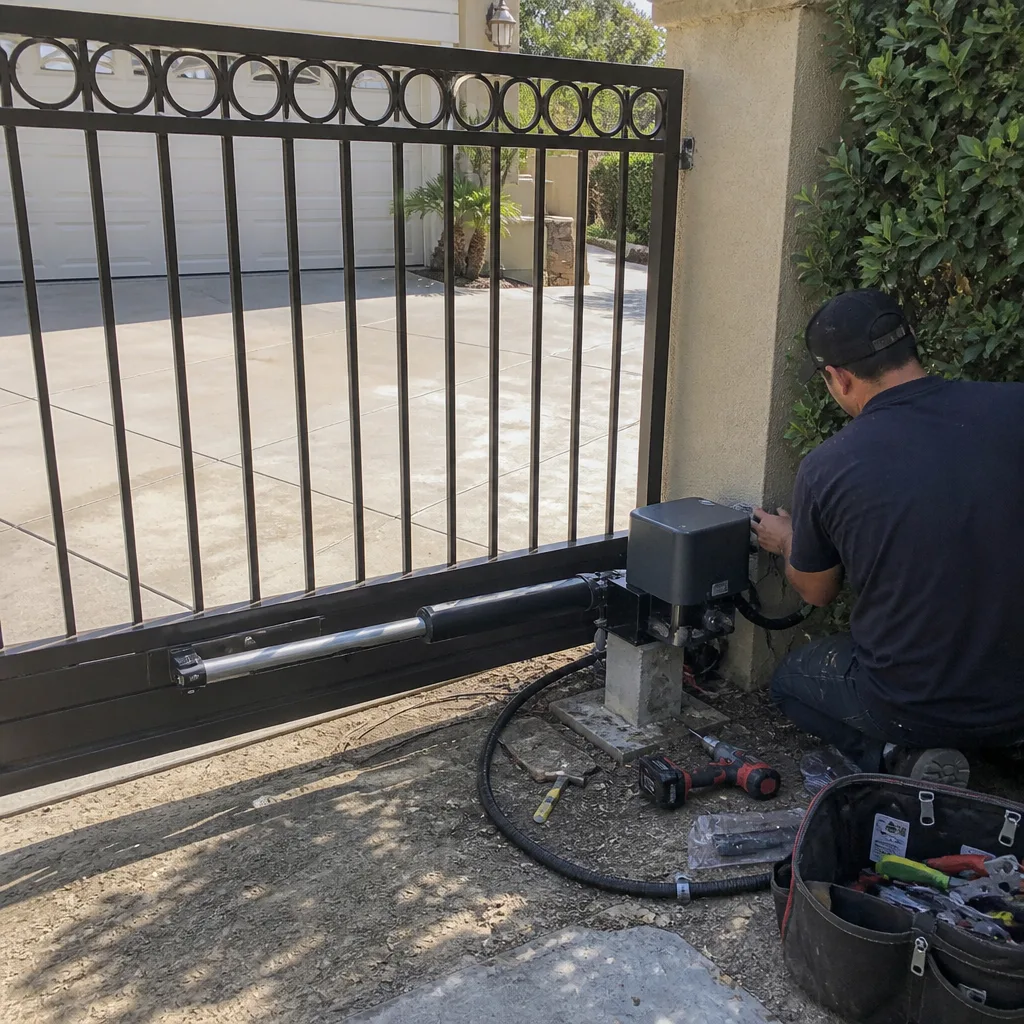 After
AfterSeasonal Gate Repair Care for Agoura Hills: Year-Round Homeowner’s Guide
Most Agoura Hills homeowners replace a gate operator every 7 to 10 years, but the ones who get 15 or 20 years out of theirs share a habit: they pay attention to the season, not just the breakdown. A gate that works fine in January can bind, groan, or fail outright by August, and the cause is rarely the motor itself. It is the heat, the grit, the rain, the shifting soil, and the slow accumulation of small problems nobody noticed. This guide lays out what to check each season, what to leave alone, what a fair repair costs in this market, and when to call someone who does this work every day. Written for homeowners in Agoura Hills who plan to stay in their homes for another twenty years and want the gate to last that long too.
Quick Answer
Seasonal gate care in Agoura Hills comes down to five tasks: cleaning the track and rollers every quarter, checking hinges and welds for cracking each spring, testing the safety reverse and photo eyes monthly, tightening mounting bolts against the dry-season soil movement, and keeping the operator’s internal gears lubricated with the right grease before winter rains arrive. A homeowner can handle about 80% of this in under an hour per season. The other 20% involves high-tension springs, electrical wiring, and motor calibration, which are best left to a trained professional.
Table of Contents
- Spring Gate Care in Agoura Hills: Rain Damage, Rust, and Realignment
- Summer Gate Maintenance: Heat, Dry Soil, and Thermal Expansion
- Fall Gate Preparation: Santa Ana Winds, Fire Season, and Debris
- Winter Gate Care: Cold Snaps, Moisture, and Motor Strain
- What Gate Repairs and Tune-Ups Cost in Agoura Hills
- What a Homeowner Can Safely Do vs. What to Leave Alone
- A Seasonal Gate Maintenance Checklist You Can Print
- Common Mistakes to Avoid
- When to Call a Professional
- Frequently Asked Questions
Spring Gate Care in Agoura Hills: Rain Damage, Rust, and Realignment
By March, a gate in Agoura Hills has survived the wettest months of the year. The January and February rains soak the clay-heavy soil along Old Agoura and Liberty Canyon, and that soil does something predictable: it swells. A gate post set in concrete can shift a quarter inch when the ground around it expands, and a quarter inch at the post is enough to make the gate drag on its latch or forget where its limit stops are. We see more “the gate worked fine last fall” calls in March than any other month.
Start the spring with a visual inspection. Walk the full length of the gate with the opener disengaged and push it by hand. It should move smoothly from fully closed to fully open without binding, scraping, or hesitating. If you hear a grinding sound near the hinge side, the gate has shifted on its posts. If the gate sags visibly at the latch end, the hinge brackets have loosened or the post has moved in the wet soil.
Rust is the second spring concern. Agoura Hills sits far enough inland to escape the daily marine layer that keeps coastal gates wet, but the winter rain combined with morning fog from the Conejo Valley leaves surface rust on unprotected steel. Look for orange staining around welds, hinge pins, and the bottom rail. Light surface rust is cosmetic and can be wire-brushed and painted. Flaking rust that has eaten into the metal is structural and needs a welder’s attention.
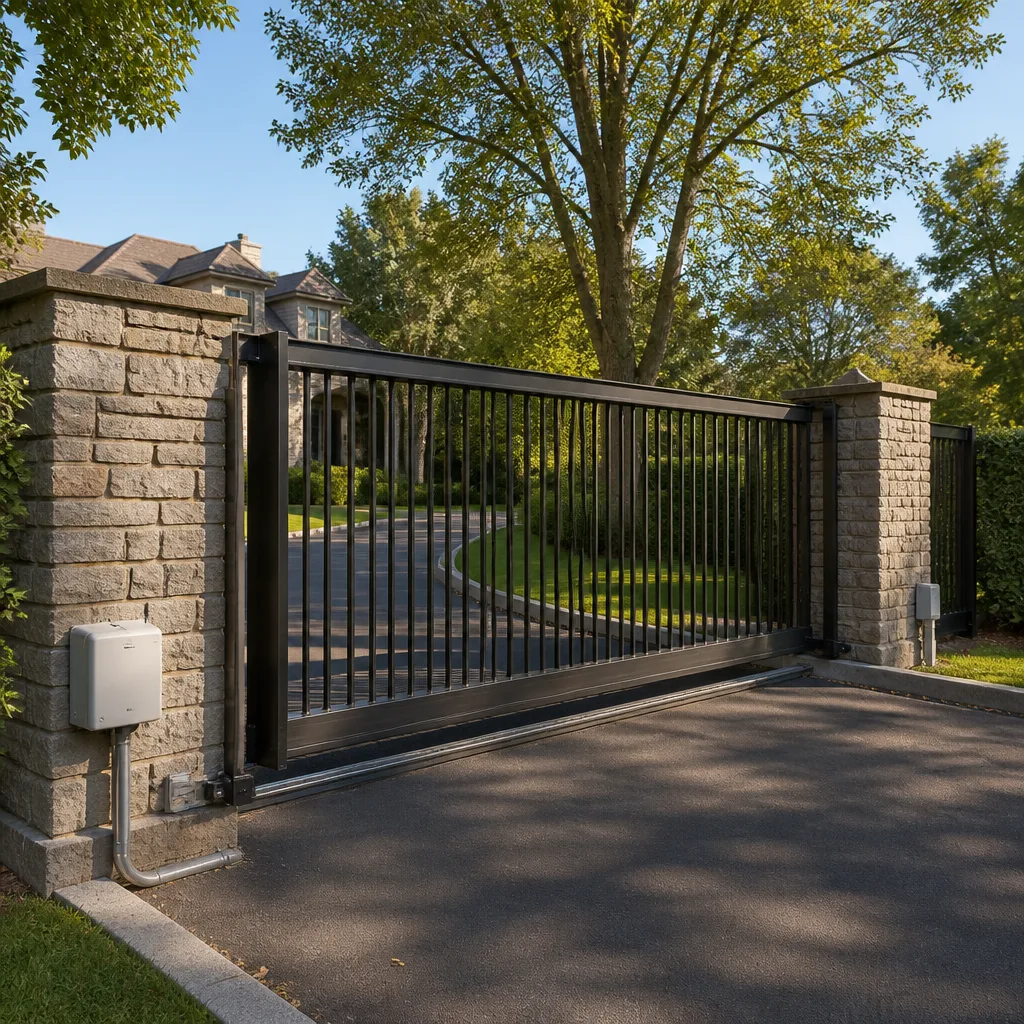
Spring is also the right time to clean the track. Slide gates accumulate decomposed granite from the hillsides, mud from the winter, and leaf litter from the oaks along Chesebro Road. A track packed with grit forces the rollers to work against resistance, which overloads the motor. Sweep the track, then flush it with a garden hose and let it dry completely.
Spring Gate Care Steps
- Disengage the opener and push the gate manually through its full travel. Note any binding, scraping, or resistance.
- Inspect all hinge welds and brackets with a flashlight. Hairline cracks are easier to see in daylight than at night.
- Wire-brush any surface rust and touch up with a rust-inhibiting primer and exterior paint.
- Sweep and flush the track or clean the driveway path for swing gates.
- Tighten all visible mounting bolts on the operator, hinge brackets, and latch plate to 30 to 40 foot-pounds for a typical residential gate.
- Test the safety reverse: place a 2×4 in the gate’s path and confirm the gate reverses on contact.
Summer Gate Maintenance: Heat, Dry Soil, and Thermal Expansion
Agoura Hills summers are dry and hot, with daytime highs from July through September regularly running 90 to 100 degrees, and sometimes higher during the worst Santa Monica Mountain heat waves. That heat does two things to a gate: it expands the steel, and it bakes the moisture out of the soil. Both are harder on gates than most homeowners expect.
Thermal expansion is real for long steel gates. A 16-foot steel gate can grow about an eighth of an inch in full summer sun. That sounds like nothing, but if the gate was installed in cool weather with tight clearances, that eighth of an inch can make the latch bind, the lock bolt refuse to seat, or the gate scrape against the driveway as the day heats up. A gate that works at 8 a.m. and drags at 3 p.m. is almost always a thermal expansion problem, not a motor problem.
The dry soil is quieter but harder to fix. When the clay soil dries out in July and August, it contracts and can pull away from the concrete post footings. A gate post loses lateral support, the gate sags a fraction, and the limit switches start to misbehave because the gate is no longer traveling the same arc it was set for. In the Oak Park and Morrison Ranch neighborhoods, where driveways slope, we see more gate sag in late summer on the uphill side specifically because of this soil movement.
Summer maintenance for an automated gate in this climate should include:
- Checking the gate-to-latch clearance at midday, when the gate is hottest and longest
- Lubricating hinge pins and roller bearings with a dry silicone spray, not a heavy grease that will attract dust
- Clearing the area around the photo eyes of dead grass and weeds, which build up fast in summer and trip the safety circuit
- Checking the operator’s internal cooling fan or vent openings for spiderwebs and dust, which are the leading cause of summer motor overheating in this area
- Testing the manual release mechanism so you know it works before you need it during a summer power outage
Fall Gate Preparation: Santa Ana Winds, Fire Season, and Debris
Every Agoura Hills homeowner knows what October brings. The Santa Ana winds funnel through the canyons and across the 101 corridor, pushing dry air down from the high desert. Wind gusts of 50 to 70 mph are common in the fall, and a gate that is not secured against them becomes a sail. A wind-driven gate slams into its stops, bends its hinges, and shears bolts. A wind-driven gate also destroys its own operator, because the motor and gearbox absorb the shock every time the gate hits the end of its travel.
The single most important fall task is checking the gate’s wind bracing and end stops. If the gate moves more than an inch or two when you push against it at the latch end with the opener disengaged, the mechanical stops are worn or the hinge brackets are loose. Fixing that before the first Santa Ana event saves a $400 to $900 operator replacement.
Fall is also fire season in the Santa Monica Mountains, and a gate that refuses to open is a genuine problem during an evacuation. Twice a year is not too often to test the manual release and confirm you can open the gate by hand with no power to the operator. If your gate has a battery backup, fall is the time to check its charge and replace the batteries if they are more than two years old. If your gate does not have a battery backup and you live in a high-fire-risk zone off Kanan Road or Chesebro, it is worth a conversation with a gate professional about adding one.
Debris is the last fall item. Oak leaves, sycamore bark, and dried brush collect in the gate track and around the operator housing. A leaf pile against a hot motor housing is a fire risk as much as a mechanical one. Sweep the track weekly during leaf-drop season, and keep the area within three feet of the operator clear.
Winter Gate Care: Cold Snaps, Moisture, and Motor Strain
Agoura Hills winters are mild by national standards, but they still bring enough cold and moisture to affect gate hardware. Overnight lows in December and January frequently drop into the 30s in the canyons, and the winter rain returns. A gate system that was slightly out of alignment in October will be noticeably worse by February, because moisture lubricates the soil enough to let posts shift again.
The biggest winter issue we see is not the cold itself but the strain on the motor. As temperatures drop, the grease inside the operator’s gearbox thickens. The motor works harder to move the same gate. If the gate is already binding slightly at the hinges or dragging on the track, the additional load from cold grease is what pushes a struggling operator into failure. The gate does not fail because it is cold. It fails because the cold exposed a problem it already had.
Winter is the season for electrical checks. Moisture finds its way into junction boxes, keypad housings, and the operator’s control board compartment. Look for corrosion on any exposed wire connections, condensation inside the keypad, or a control board that shows moisture stains. These are repairs a professional should handle, because gate operators run on line voltage and the wrong wire touched to the wrong terminal can destroy the control board.
If your gate operator is more than ten years old and struggles in cold weather, it may be running on a capacitor that has lost capacity. A weak capacitor delivers lower starting torque, which shows up first on cold mornings. This is a $60 to $120 part, and replacing it before it fails completely often avoids a full motor replacement. Brands like LiftMaster and FAAC use capacitors that are easily tested and swapped by a qualified technician.
What Gate Repairs and Tune-Ups Cost in Agoura Hills
Gate repair pricing in Agoura Hills runs slightly above the Los Angeles average because of the drive distances and the concentration of older, custom estate gates in neighborhoods like Morrison Ranch, Old Agoura, and the unincorporated areas off Kanan Road. Here is what homeowners in this market typically pay, based on the service calls we handle every week.
| Service | Typical Agoura Hills Cost Range | Notes |
|---|---|---|
| Seasonal tune-up (inspection, lubrication, safety test) | $89 to $150 | Ironworks Gate Co. offers an $89 Seasonal Tune-Up |
| Hinge replacement (pair, welded) | $180 to $350 | Price depends on gate weight and access |
| Track cleaning and realignment | $120 to $250 | Includes roller inspection |
| Safety sensor (photo eye) replacement | $110 to $220 | Single or paired sensor set |
| Operator motor/gearbox replacement | $400 to $900 | Varies by brand; LiftMaster, FAAC, BFT, Mighty Mule all common in this area |
| Full operator replacement (installed) | $1,200 to $2,800 | Includes programming and safety testing |
| Broken weld repair | $150 to $400 | On-site welding; price by weld location and gate weight |
| Emergency service call (off-hours) | $150 to $350 | Above standard labor rate |
Every estimate is quoted and agreed before work starts. A homeowner should never face a bill larger than the quote because the technician “found something else” mid-repair. If a shop will not put the price in writing before turning a bolt, that is a signal to call someone else.
Standing offers for Agoura Hills homeowners include $50 off any repair over $250, a free second opinion on any written estimate, and a permanent 5% senior and veteran discount. These are standing offers, not seasonal promotions.
What a Homeowner Can Safely Do vs. What to Leave Alone
Some gate maintenance is genuinely safe for a homeowner. Some of it can hurt you or destroy the gate. Knowing the line between the two is the difference between a $10 bottle of lubricant and a $2,000 operator replacement, or worse.
Safe for a Careful Homeowner
- Sweeping and flushing the track with a garden hose
- Cleaning photo eye lenses with a soft cloth
- Lubricating hinge pins and roller bearings with dry silicone spray
- Tightening visible bolts that are already accessible
- Testing the safety reverse with a 2×4 or similar object
- Checking the manual release lever and confirming you can open the gate by hand
- Trimming vegetation away from the gate, track, and photo eyes
Leave to a Trained Professional
- Anything involving torsion or tension springs. Gate springs on some designs are under enough tension to break bone or worse if they release unexpectedly. This is not a DIY job.
- Any electrical work inside the operator housing. The line voltage, capacitor, and control board are all dangerous to work on without training, and one wrong wire ruins the board.
- Limit switch and travel calibration. Setting these incorrectly causes the gate to slam its end stops, which damages gears and hinges quickly.
- Welding repairs. Cracked hinge brackets and broken welds need a certified welder, not a homeowner with a flux-core hobby rig.
- Replacing a heavy gate leaf. Gates weigh 300 to 800 pounds. A dropped gate is a crushing hazard.
We have seen homeowners in Agoura Hills turn a $200 hinge repair into a $1,500 operator replacement because the gate sagged onto the track while they tried to brace it without the right equipment. The K.E.Y.S. approach we work by at Ironworks Gate Co. home exists because of exactly that. Krafted right. Every time. Your home first. Standing behind it. Sometimes the safest thing a homeowner can do is make one phone call and let a background-checked, uniformed technician handle it.
A Seasonal Gate Maintenance Checklist You Can Print
Here is the full year at a glance. Post this on the garage wall or keep it in the gate operator’s manual sleeve. Each item takes five minutes or less, except where noted.
Monthly (Every Month, Year-Round)
- Test the safety reverse with a cardboard box or 2×4. The gate must reverse within two seconds of contact.
- Check that the photo eyes are aligned and free of dirt, spiderwebs, and plant growth.
- Listen to the gate for a full open and close cycle. Any new grinding, squealing, or hesitation is worth investigating now, not later.
Quarterly (March, June, September, December)
- Sweep and flush the track or clean the gate’s swing path. In fall, do this weekly during leaf drop.
- Lubricate hinge pins, roller bearings, and the latch mechanism with dry silicone spray.
- Tighten visible mounting bolts on the operator and hinge brackets to 30 to 40 foot-pounds for a standard residential gate.
- Check the manual release. With the opener disengaged, push the gate through its full travel by hand and note any resistance.
Twice a Year (Spring and Fall)
- Inspect all welds and hinge brackets with a flashlight for hairline cracks. Spring is after the rain; fall is before the Santa Anas.
- Check the battery backup if installed. Replace batteries older than two years.
- Inspect wire connections and the control board for corrosion, moisture stains, or pest damage.
- Test the gate at both ends of the day. A gate that binds in the afternoon heat but not the morning has thermal expansion, and a gate that struggles on cold mornings may have a failing capacitor or thick gearbox grease.
Common Mistakes to Avoid
- Ignoring a noisy gate. A gate that has started grinding or squealing is telling you something. The sound is almost always a failing roller, a dry hinge, or a misaligned track, and every one of those gets cheaper to fix the earlier it is caught. By the time the noise stops on its own, the damage is done.
- Using heavy grease on outdoor components. Heavy grease attracts dirt and decomposed granite dust, turning into a grinding paste that wears hinge pins and rollers faster. Use dry silicone spray or a light machine oil on exposed moving parts.
- Pressure-washing the operator or keypad. High-pressure water forces moisture past the seals and into the control board and electrical connections. A garden hose on low pressure is the right tool for cleaning the gate itself, and a dry cloth is the right tool for the operator.
- Adjusting the limit switches without knowing what they control. Limit switches tell the operator where to stop. Setting them wrong makes the gate slam its end stops or stop short of latching. That is a fast way to bend hinges and strip gears, and it is a professional adjustment for a reason.
- Propping a sagging gate with a 2×4 and calling it fixed. We have seen more than one homeowner in the hills of Agoura Hills brace a sagging gate with lumber and forget about it. The brace shifts, the gate drops further, the opener strains against the added load, and the repair bill doubles. A sagging gate needs its hinges rebushed or its post reset, not a prop.
- Skipping the safety reverse test because “it has always worked.” Safety sensors age, wiring connections corrode, and photo eyes fall out of alignment. A gate that fails to reverse on contact can injure a child or a pet. The test takes 30 seconds and is the most important part of monthly maintenance.
- Waiting until the gate stops working to call anyone. Half the repairs we make in this market could have been $89 tune-ups if the homeowner had called at the first sign of trouble. Gates do not heal themselves. They get worse, and they get more expensive.
When to Call a Professional
Call a gate professional when the gate sags visibly at the latch end, when the operator runs but the gate does not move, when the gate reverses for no reason, when the keypad stops responding, when you see cracked welds or bent hinges, when the gate slams at the end of its travel, or when any electrical component shows signs of burning, arcing, or water damage. These are not tune-up items. They are repair items, and guessing wrong on a 500-pound moving gate is dangerous.
Ironworks Gate Co. offers free estimates in Agoura Hills. Call (213) 293-3886 and a live person answers, 24 hours a day, 7 days a week. No voicemail tree, no answering service, no waiting until Monday morning.
Frequently Asked Questions
Gate repair in Agoura Hills typically costs between $120 and $350 for common issues like hinge replacement, track realignment, safety sensor replacement, and limit switch adjustment. Larger repairs like operator motor replacement run $400 to $900, and full operator installation runs $1,200 to $2,800. Call (213) 293-3886 for an exact quote before any work starts, and remember estimates are free.
A gate in Agoura Hills should be professionally tuned up twice a year, once in spring after the rain season and once in fall before the Santa Ana winds. Homeowner-level maintenance should be monthly, following the checklist in this guide. Ironworks Gate Co. offers an $89 Seasonal Tune-Up for exactly this purpose, and the inspection catches problems before they become break-downs.
For gate repair calls, yes, in most cases Ironworks Gate Co. completes the job in a single visit and dispatches same-day for gate repairs. For new gate installation or operator replacement, the work is measured, ordered, and scheduled properly rather than rushed. Call (213) 293-3886 and a live person will tell you exactly when a technician can be at your home.
The most common cause in Agoura Hills is thermal expansion. A steel gate expands slightly in full summer sun, and if it was installed with tight clearances, that expansion makes the latch bind or the gate scrape. This is a setup problem, not a motor problem, and it is corrected by adjusting the gate’s clearances and limit stops. Call for a free estimate and we will diagnose it on site.
Ironworks Gate Co. is trained and equipped on nine major gate-automation brands, including LiftMaster, FAAC, BFT, Mighty Mule, Viking, Ghost Controls, DoorKing, Elite, and Linear. Whatever opener is on the driveway, the correct fix is made on the first visit because the technician already knows the brand. Every repair is backed by the written 90-Day Done Right Promise.
A seasonal tune-up catches small problems before they become breakdowns, and in our experience in Agoura Hills, it is the single most cost-effective gate service available. The $89 Seasonal Tune-Up includes inspection, lubrication, safety testing, and bolt tightening. A hinge that is caught at $89 does not become a $350 hinge replacement or a $900 operator failure later. It is the cheapest insurance a gate owner can buy.
The Bottom Line
A gate in Agoura Hills works hardest in January and August, two months that test completely different parts of the system. The rain swells the soil and shifts the posts. The heat expands the steel and stalls the motor. What keeps the gate reliable through both is a regular rhythm of simple checks: clean the track, lubricate the pins, test the safety sensors, tighten the bolts, and listen to what the gate is saying. Most of this a homeowner can handle in under an hour a month. The rest belongs to a professional who does this work every day. Done right, and backed in writing.
If your gate needs a seasonal tune-up, a repair, or a straight answer about whether that noise is serious, call (213) 293-3886. A live person answers, the estimate is free, and the price is agreed before any work begins.
Written by Victor Salinas, Owner at Ironworks Gate Co., serving Agoura Hills since 2013.