
Last updated August 25, 2026
Free on-site gate assessment - hinges, posts, and your LiftMaster or Nice gate operator checked before anything is quoted
The assessment is free and the quote is the invoice.
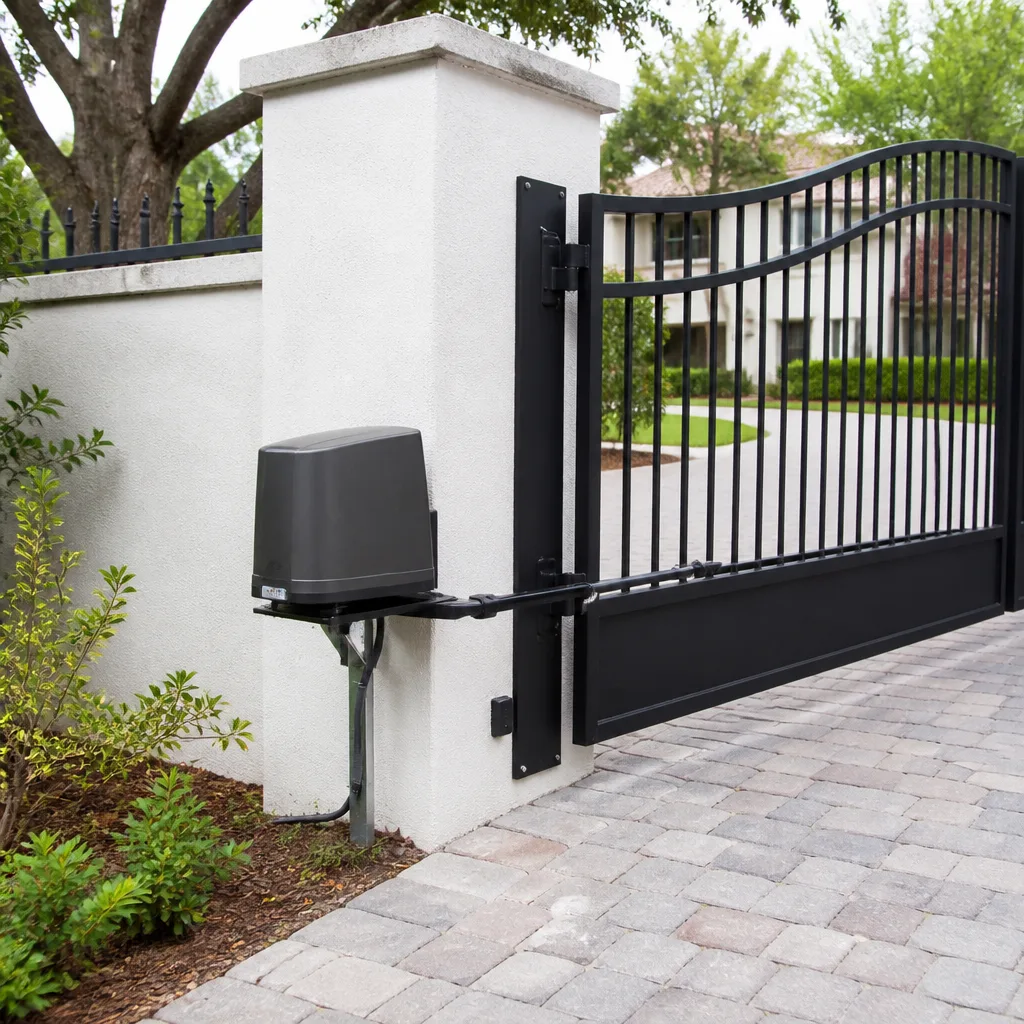
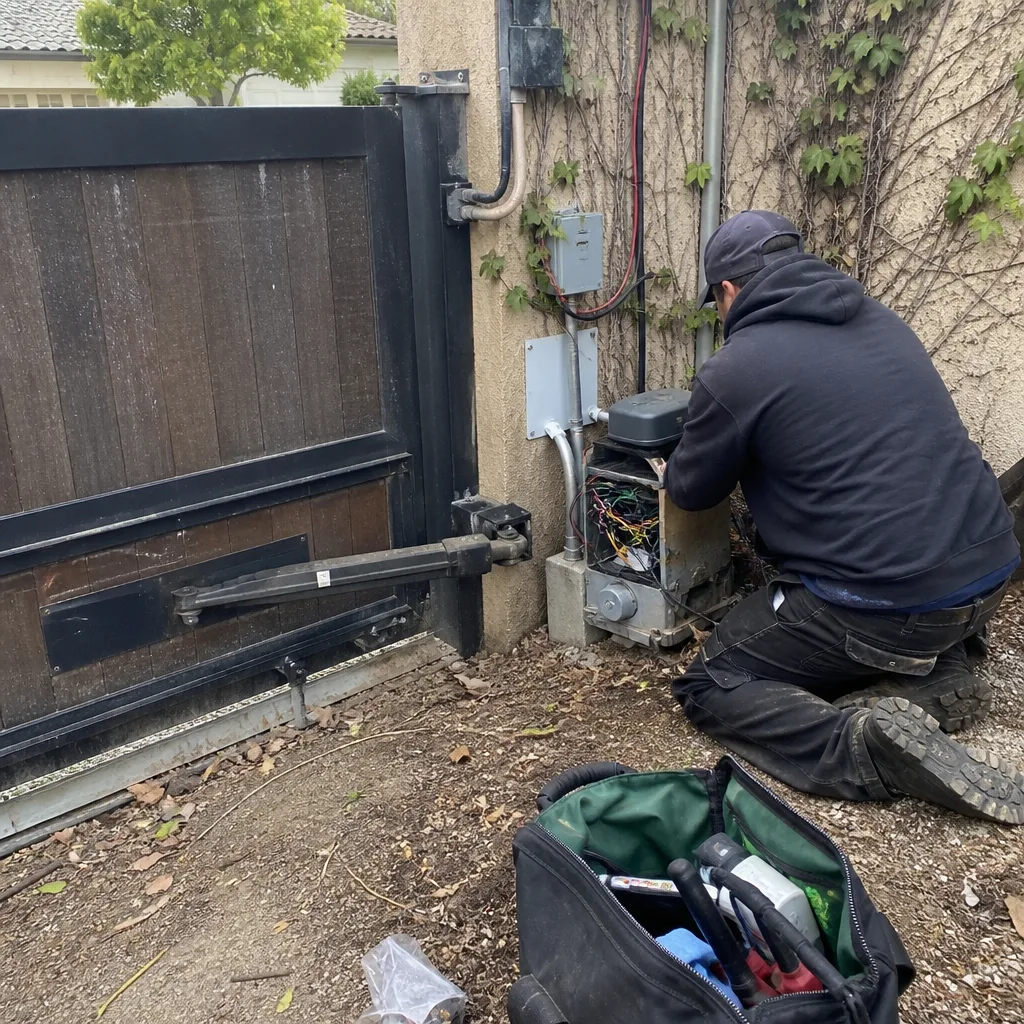 Before
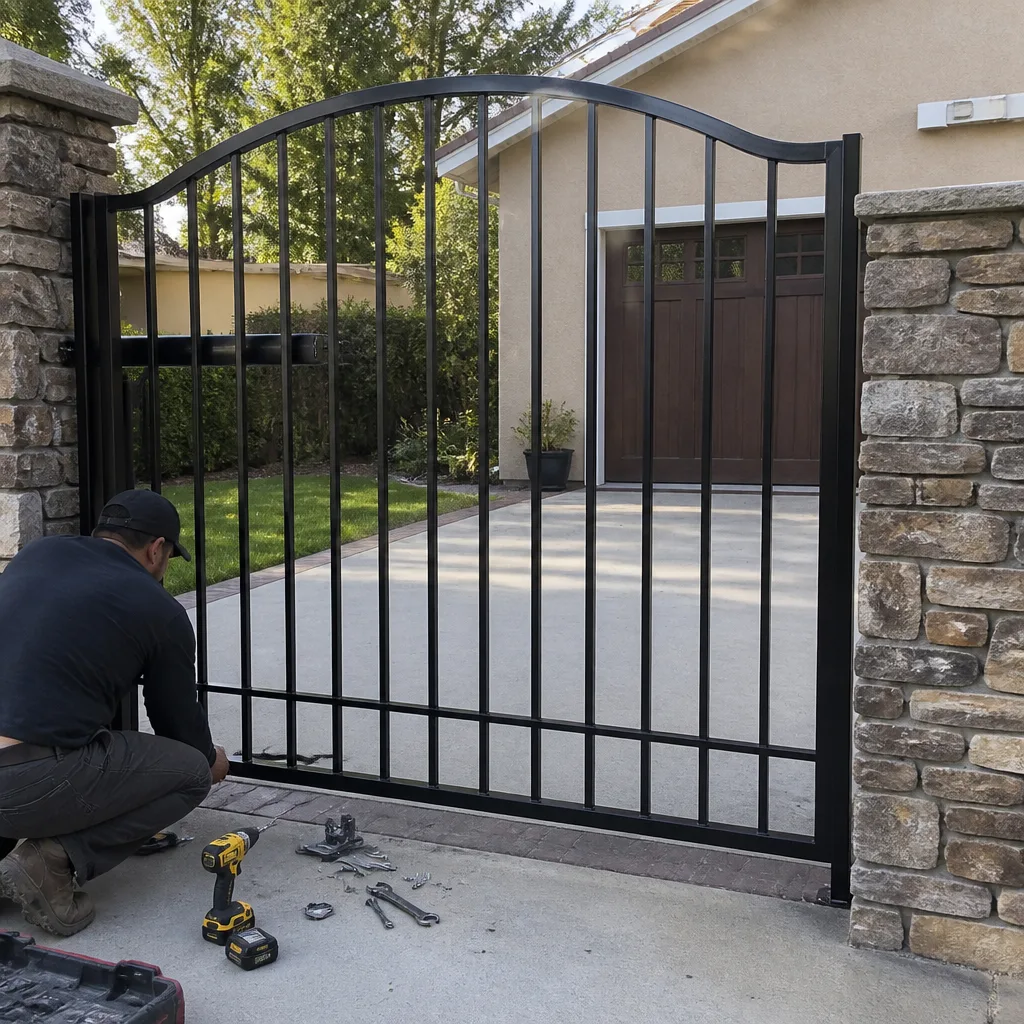 After
After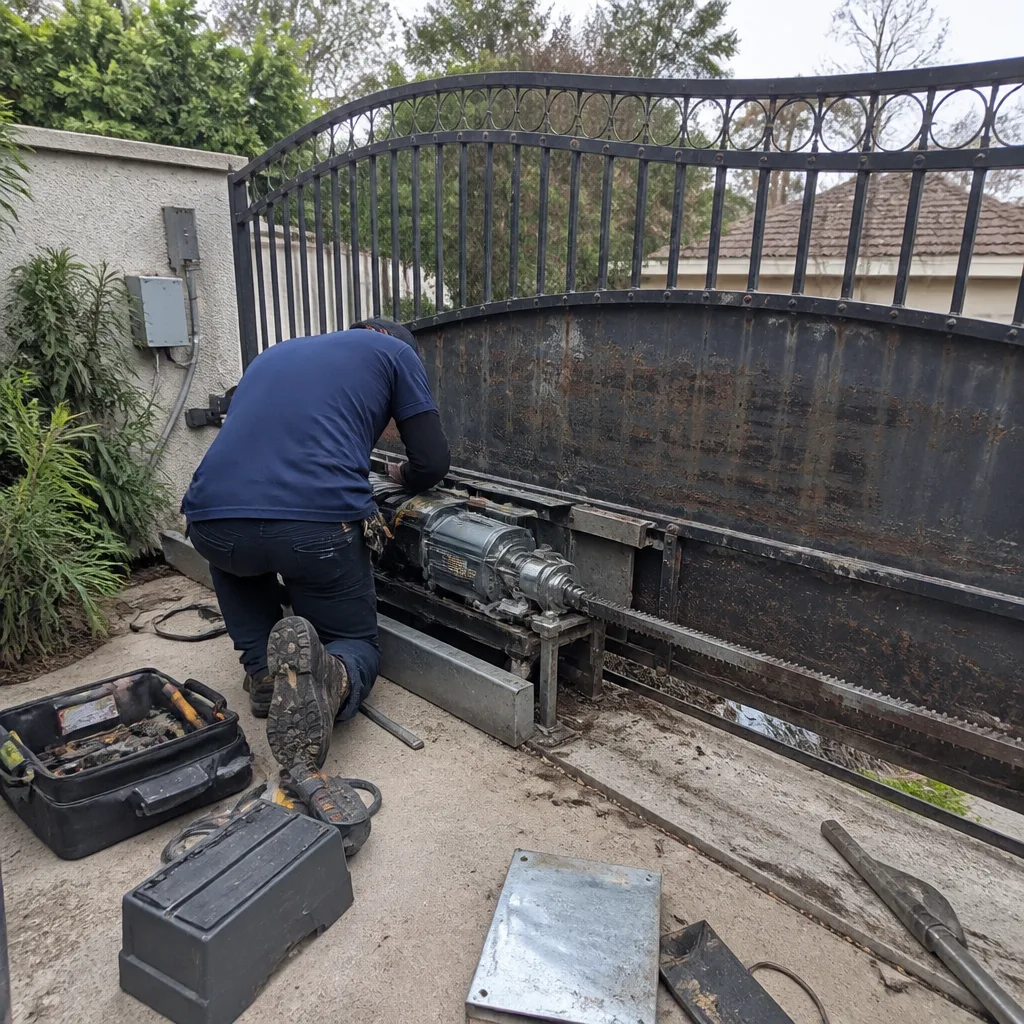 Before
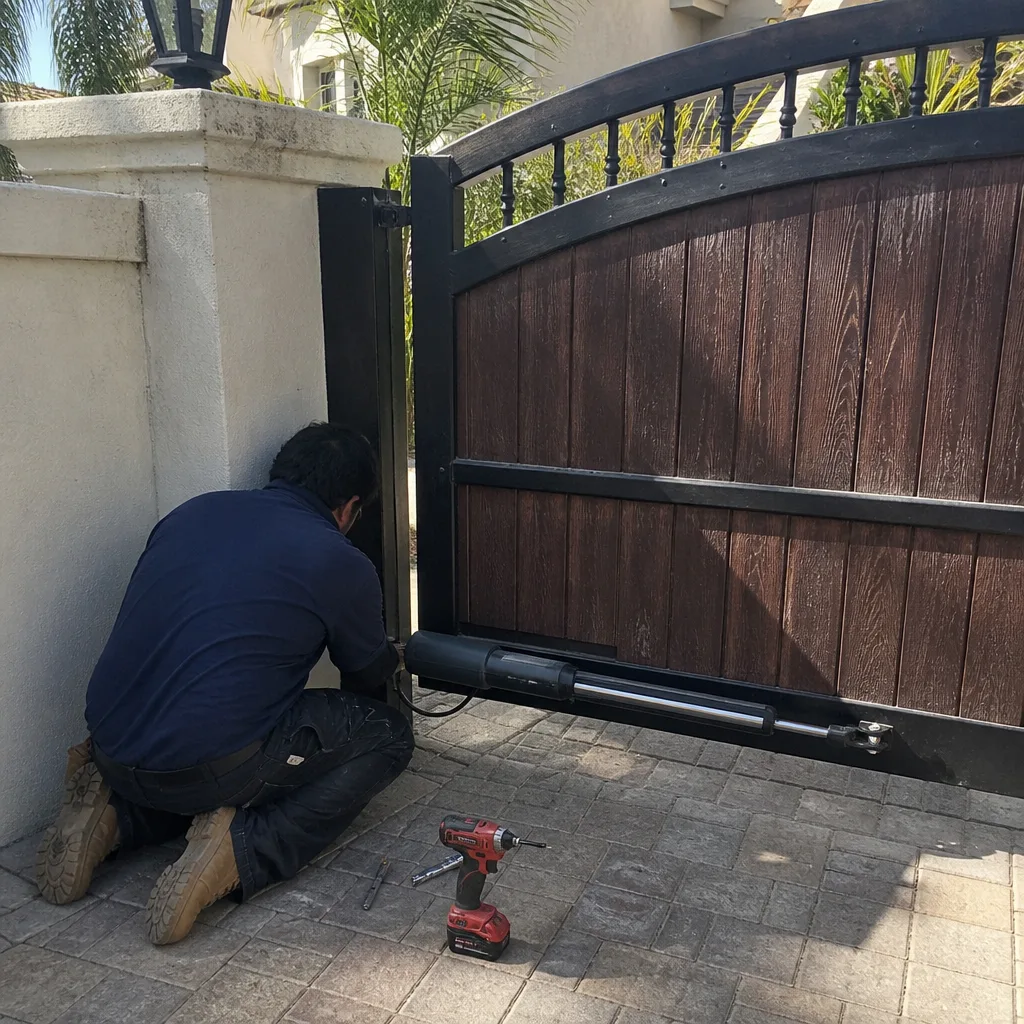 After
After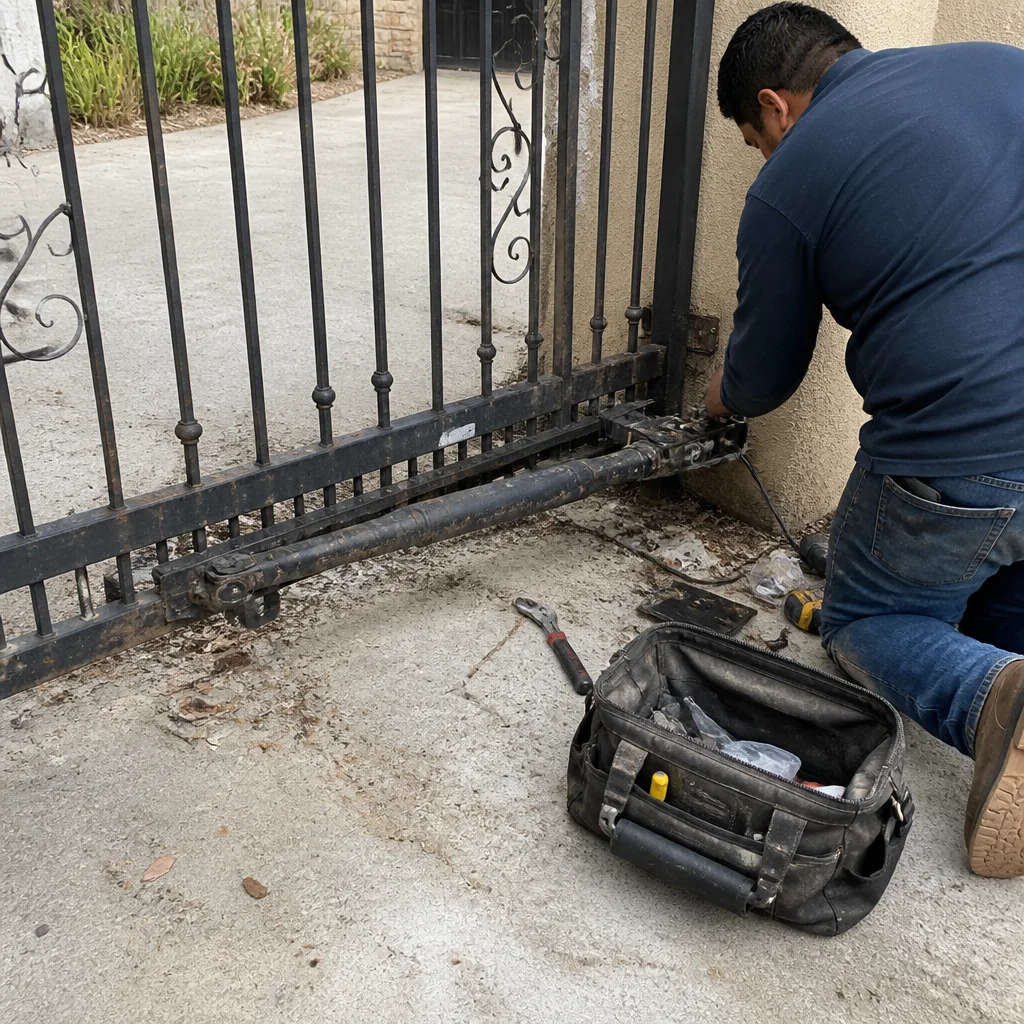 Before
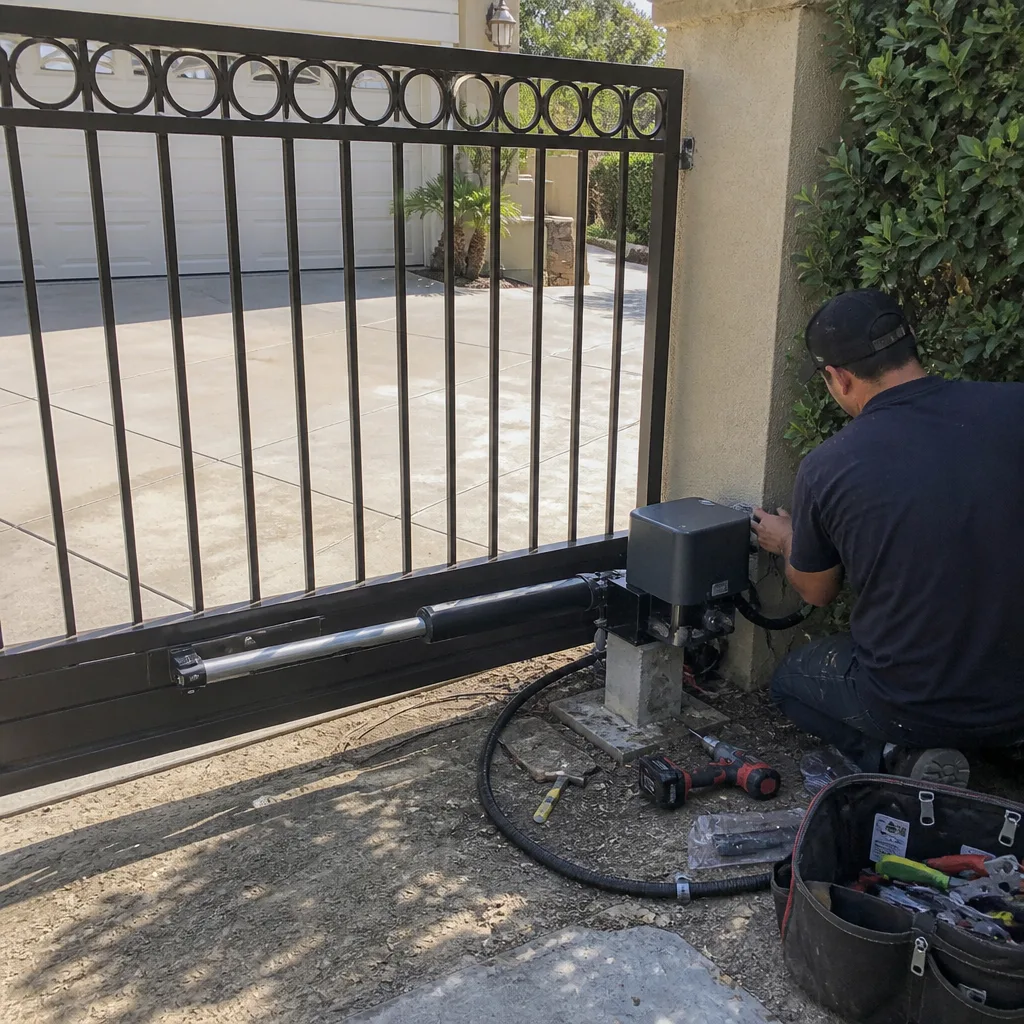 After
AfterDIY vs Professional Gate Repair: The Agoura Hills Homeowner’s Decision Guide
Here is a statistic most Agoura Hills homeowners never hear: roughly four out of five automatic gate failures we are called to repair started as a small issue someone tried to fix themselves. A gate that slips off track, a remote that stops responding, a motor that hums but will not move. These look simple. Then a spring lets go under tension, or a control board gets wired wrong, and a $150 fix becomes an $1,800 replacement. This guide lays out what you can safely handle on your own, what you should never touch, and how to tell the difference before the gate teaches you the hard way.
Quick Answer
Most Agoura Hills homeowners can handle basic gate maintenance safely: cleaning the track, tightening visible bolts, lubricating hinges, and reprogramming remotes. Anything involving torsion springs, welded joints, buried cable, or control board wiring should be left to a professional. The cost of a mistake in those areas regularly runs three to five times the cost of calling a gate specialist the first time.
Table of Contents
- What You Can Realistically Fix Yourself
- What You Should Never Touch Without Training
- DIY Cost vs Professional Repair Cost in Agoura Hills
- How Agoura Hills Conditions Affect Gate Wear and Repair
- The Automation Factor: Nine Brands, Nine Different Problems
- Step-by-Step: Safe Gate Maintenance You Can Do This Weekend
- Safety First: The Parts That Can Hurt You
- Common Mistakes to Avoid
What You Can Realistically Fix Yourself
Not everything needs a service call. Some gate work is genuinely within reach of a homeowner with basic tools, patience, and a willingness to follow instructions carefully. The key is knowing where the line sits between maintenance and repair. Maintenance is inspection and adjustment. Repair is diagnosis and replacement. Most people can handle the first category and should leave the second to someone with a truck full of the right parts.
Here is what we tell Agoura Hills homeowners they can do on a Saturday afternoon:
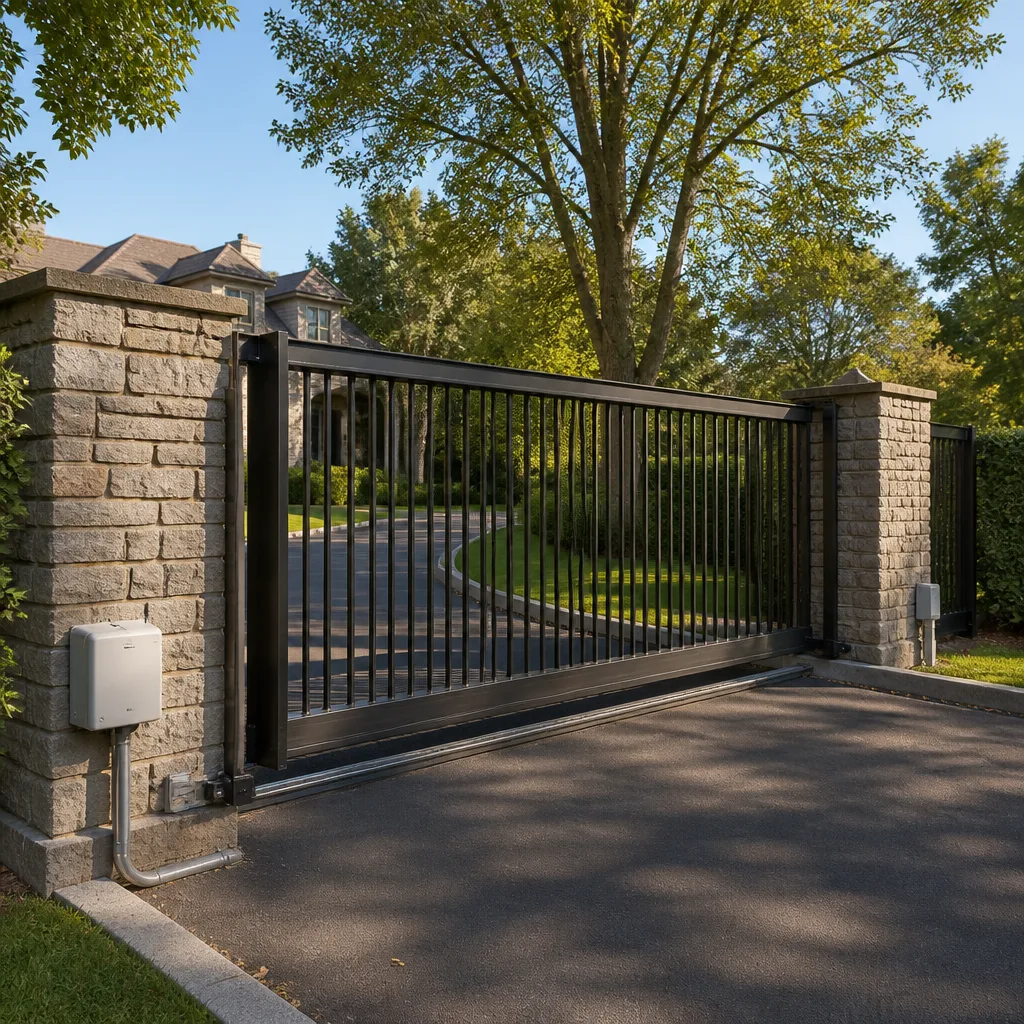
- Cleaning the track and wheels. Slide gates accumulate dirt, sand, leaves, and the fine dust that blows in from the Santa Monica Mountains. A stiff brush, a shop vacuum, and a damp rag solve most slow-gate complaints on chain-driven and cantilever systems.
- Tightening visible hardware. Gate brackets, hinge bolts, and wheel mount bolts loosen over time from daily cycling. A socket set and ten minutes of checking beats a gate that sags an inch lower every month.
- Lubricating hinges and rollers. A dry hinge is a loud hinge. White lithium grease on pivot points and a silicone-based spray on rollers once every six months keeps a swing gate moving quietly.
- Reprogramming or replacing remote batteries. If the gate stopped responding to a remote but works from the keypad, the remote is usually the problem. Battery replacement and re-syncing to the opener is straightforward, especially on LiftMaster and Mighty Mule systems with clearly marked learn buttons.
- Photocell alignment. If the gate closes partway then reverses, the safety sensors near the bottom of the posts may be misaligned or dirty. Wipe the lenses and check that they face each other squarely. A small adjustment often fixes it.
- Inspecting for visible damage. Walk the length of the gate every month. Look for rust blooms, cracks starting at welds, and wheels that have gone egg-shaped. You are looking, not fixing, but seeing a problem early changes the repair bill dramatically.
None of this requires opening a motor housing, touching a spring under tension, or working near the gate’s crush points. That is the line. Stay on the safe side of it.
What You Should Never Touch Without Training
This section matters more than any other in this guide. Some gate components store energy in ways that release it without warning. Others carry line voltage or require specialized programming that no YouTube video covers correctly for your specific board revision. We have seen the aftermath of mistakes in every category below.
- Torsion springs and counterbalance springs. A swing gate spring under load holds hundreds of pounds of tension. If it lets go while you are working near it, the result can be broken bones or worse. Never attempt to release, replace, or adjust a gate spring without the correct winding bars, safety training, and experience.
- Welded joints and structural cracks. Welding a gate is not the same as welding a fence post. Gate welds carry dynamic load and vibration stress. A bad weld looks fine for a month, then fails at the worst moment. Structural gate repair requires understanding of weight distribution, proper weld penetration, and post-tension behavior.
- Control board wiring. Modern gate boards from FAAC, BFT, and Linear incorporate safety inputs, loop detectors, and edge sensors. One crossed wire can fry the board, which often costs $400 to $900 to replace. If the board is not responding to the manual controls, stop and call someone who has worked on that brand before.
- Buried conduit and low-voltage cable runs. Agoura Hills properties often run cable under driveways, through planters, and across stonework. Digging to find a break without a wire tracer means trenching the entire length, sometimes through concrete. That turns a $200 cable repair into a multi-day job.
- Hydraulic operators. Some estate gates use hydraulic openers rather than electromechanical ones. These systems hold hydraulic fluid under pressure and require specialized tools for bleeding and service. Opening the wrong fitting sprays hot fluid.
- Any repair to a gate that carries a life-safety function. If your gate protects a pool, a steep drop, or operates as part of a community access system, the stakes are higher. Building codes require specific safety edge operation and entrapment protection that must be verified after any work.
If you are looking at a part and wondering whether it is under tension, assume it is. Call someone who knows the difference.
DIY Cost vs Professional Repair Cost in Agoura Hills
Here is the honest math. DIY gate repair almost always costs less on the day you do it and more across the following twelve months, once the misdiagnosis gets corrected, the wrong part gets replaced with the right part, and the secondary damage gets addressed. We see this pattern weekly. The question is not what a repair costs today, but what it costs by the time the gate actually works right.
These are representative price ranges for Agoura Hills gate work, based on what we quote and what we see from other local shops:
- Remote replacement and programming: $40-$75 DIY (replacement remote), $85-$150 professional (includes programming and testing all remotes).
- Track cleaning and adjustment for slide gates: $0-$30 DIY (supplies), $95-$180 professional (includes wheel and bracket inspection).
- Hinge replacement on a standard swing gate: $35-$70 DIY (parts only), $250-$450 professional (includes leveling, weld work if needed, and load verification).
- Photocell replacement: $25-$45 DIY (generic part), $120-$220 professional (brand-matched sensors, alignment, and safety testing).
- Control board diagnosis and replacement: $80-$250 DIY risk (generic board that may not have the right firmware or plug configuration), $400-$900 professional (brand-correct board, programming, and full system test).
- Spring or counterbalance repair: Not safely DIY. Professional replacement typically runs $350-$700 including the new spring, tension calibration, and balance verification.
- Full gate opener replacement: $400-$800 DIY (unit only, no labor warranty, self-installed), $1,200-$2,800 professional (unit, mounting, wiring, safety sensors, programming, and labor warranty).
The professional price includes something the DIY price never does: a person standing behind the work. At Ironworks Gate Co., every completed job carries a written 90-Day Done Right Promise. If it is not right, we come back and make it right. No paperwork, no arguing. That is worth real money, but it only works if you call us the first time.
How Agoura Hills Conditions Affect Gate Wear and Repair
Gates fail differently in Agoura Hills than they do in, say, Calabasas or Westlake Village. The reasons are specific to this area and worth understanding before you decide whether a repair is something you want to attempt.
First, the heat. Summer temperatures in Agoura Hills regularly push past 95 degrees, and heat does two things to gate components. It degrades the plastic gears inside opener motors, and it causes metal to expand, which throws off the alignment on swing gates hung with tight tolerances. A gate that opens fine at 8 a.m. and drags at 3 p.m. is often a thermal expansion problem, not a dying motor. Diagnosing that correctly takes experience, and misdiagnosing it leads to replacing a motor that was never the problem.
Second, the wind. Agoura Hills sits in a natural corridor where Santa Ana conditions push hard gusts through parts of Old Agoura, Morrison Ranch, and the hill areas near Ladyface Mountain. Wind load on a solid-panel gate is substantial. Hinges and posts wear faster here than in sheltered neighborhoods closer to the coast. A gate that slams against its stop post in the wind is putting stress on every weld and hinge pin, and that stress eventually shows up as cracks and sag.
Third, the hills themselves. Many Agoura Hills homes sit on sloped lots with long driveways and custom gate installations. Grade changes affect wheel wear on slide gates and load distribution on swing gates. A gate hung on a slope needs to be adjusted differently than one on flat ground. The standard online instructions rarely account for grade, and a homeowner following them ends up with a gate that rolls back or binds.
Fourth, the clay soil. Parts of Agoura Hills have expansive clay soil that moves with moisture. Post footings can shift slightly over years, which changes gate geometry. A gate that once closed flush against the post now leaves a gap, or a latch that caught perfectly now misses by a half inch. This is not a hardware problem. It is a footing problem, and no amount of hinge adjustment fully corrects it. A professional can shim, re-weld, or reset the post properly.
The Automation Factor: Nine Brands, Nine Different Problems
Agoura Hills driveways host a remarkable range of gate automation equipment. We service nine major brands: LiftMaster, FAAC, BFT, Linear, Viking, Ghost Controls, DoorKing, Elite, and Mighty Mule. Each brand has its own control board logic, its own failure patterns, and its own programming sequences. A technician who knows LiftMaster cold can still misdiagnose a FAAC board, and a homeowner who watched a Mighty Mule video is often lost on a BFT system.
Here is what that means for the DIY decision:
- Mighty Mule systems are the most common DIY-installed openers in this area. They are affordable and relatively simple. When they fail, the problem is usually the control board or the limit switch assembly. These are parts homeowners can sometimes swap successfully, because Mighty Mule uses modular components and clear wiring labels. The catch is that Mighty Mule parts are occasionally backordered, and the wait can stretch for weeks.
- LiftMaster openers are workhorses on residential swing gates. Their remotes are easy to program. Their control boards are less forgiving, especially on LA400 and LA500 models when the safety inputs are not terminated correctly. A homeowner who opens the board cover and starts disconnecting wires usually makes the problem worse.
- FAAC and BFT are Italian brands common on higher-end estate gates. Their boards are sophisticated, with multiple programmable parameters for speed, torque, and safety device logic. Programming requires a manual specific to the exact board revision, and the menus are not intuitive. We regularly correct faults on these systems that started when someone “just wanted to change the close speed.”
The brand that is on your gate changes whether the repair is a 20-minute job or a two-hour diagnostic session. If you do not know which brand you have, look for a label on the operator arm or the control box. If you cannot find one, send us a photo and call us. We will identify it over the phone and tell you honestly whether it is something you want to attempt.
Step-by-Step: Safe Gate Maintenance You Can Do This Weekend
This is the maintenance routine we recommend for every Agoura Hills homeowner with a gate, whether you plan to do it yourself or call us for the annual work. It takes under an hour and prevents most common failures.
- Turn off the power to the gate opener. Find the disconnect switch or unplug the operator. If it is hardwired, switch off the breaker. Never work on a gate with the motor energized.
- Walk the full path of the gate. Look at the ground contact points, the wheel tracks, and the hinge mounts. Move the gate by hand if it can be disengaged from the motor. Feel for resistance, listen for grinding, and watch for sag at the free end.
- Clean the track thoroughly. Remove leaves, dirt, and anything that has collected. For cantilever gates, check the rollers inside the gate frame, not just the visible track. For swing gates, clear debris from the swing arc.
- Tighten every bolt you can reach. Hinge bolts, bracket bolts, wheel mount bolts, post cap bolts. Use the correct size socket and do not overtighten. If a bolt keeps working loose, mark it with a paint dot and check it again in two weeks.
- Lubricate the pivot points. Hinge pins, roller bearings, and chain drives get a light coat of white lithium grease. The gate’s slide track does not get grease. Leave it dry. Grease on a track collects grit and accelerates wear.
- Test the safety functions. Restore power and test the photocells by blocking the beam while the gate closes. It should stop and reverse. Test the safety edge if your gate has one by pressing it during closing. It should reverse immediately.
- Check the remotes and keypad. Replace remote batteries once a year whether they are dead or not. Test every remote and the keypad. If one remote was lost months ago, clear it from the opener’s memory so a stranger cannot use it.
If any step in this sequence reveals a problem you cannot identify, stop there. Note what you found, take a photo, and call us. We will tell you over the phone whether it warrants a visit, and if it does, we will quote you a price before we come out.
Safety First: The Parts That Can Hurt You
We put this section near the end because we want it to stick. Gate repair, like garage door repair, is one of the few home maintenance categories where the equipment itself can cause serious injury during the repair process. Not from the electricity, though line voltage is always a concern, but from the mechanical energy stored in the gate and its components.
A swing gate weighing 400 pounds moving under motor power has enough force to break a leg. A torsion spring under load stores enough energy to shatter a hand or arm if it releases. A slide gate rolling on a rail can pinch against a post with force that no human can overcome. These are not exaggerated warnings. They are the reason gate technicians carry specific tools and follow specific procedures.
Here is the rule we use with every homeowner: if the repair requires you to put any part of your body in the gate’s path of travel while the motor is connected, or to release tension from any spring, stop. Disconnecting the motor and moving the gate by hand is safe. Working on a spring under tension is not safe, not even a little, not even with gloves and safety glasses. The tools are specialized, the stored energy is invisible, and the margin for error is zero.
Electrical work on gate openers carries its own risks. Control boards on 24-volt systems are relatively safe to handle. Line voltage wiring is not. If your opener is hardwired to a 120-volt circuit, and you are not certain which wires are low voltage and which are not, do not touch them. Agoura Hills building code requires permits for certain electrical modifications, and insurance companies have been known to deny claims for damage caused by unlicensed electrical work.
The right gate professional does not think about these hazards abstractly. They have seen the injuries, the burn marks on control boards, the springs that went through sheetrock. That experience is part of what you pay for.
Common Mistakes to Avoid
- Replacing the motor when the problem is the limit switch. This is the most expensive misdiagnosis we see. A gate that stops at the wrong spot or reverses at the wrong time is usually a limit switch or travel setting issue, not a dead motor. Homeowners replace the motor, the problem persists, and now they have spent $600 on a motor they did not need.
- Using the wrong lubricant on the track. WD-40 is a solvent, not a lubricant. Grease on a slide track collects dirt and grinds the rollers. We see tracks that have been greased by well-meaning homeowners and the repair bill is always higher because the rollers have to be replaced along with the track.
- Leaving the manual release disconnected after a power outage. During Agoura Hills wind events, power flickers. Homeowners pull the manual release to open the gate by hand, then forget to re-engage it. The gate then sits unsecured, sometimes open, and the motor spins without moving the gate when the next remote press happens.
- Buying a generic control board online. The board arrives, the connectors look similar, it plugs in, and the gate does something unexpected. Maybe the safety inputs are not recognized. Maybe the programming is incompatible. Now the gate is in a worse state than before and the homeowner has voided any remaining warranty.
- Adjusting spring tension without winding bars. We cannot say this enough. A gate spring is not a screen door spring. Using screwdrivers or locking pliers as improvised winding tools is how fingers get removed and windows get broken by flying projectiles.
- Ignoring a gate that is getting slower. Slowness is usually a sign of failing rollers, low fluid in a hydraulic system, or a motor working too hard. The fix is cheaper early. By the time the gate stops, the damage has spread from one component to three.
- Digging for buried cable without locating it first. Agoura Hills properties have landscape lighting, irrigation lines, and sometimes gas lines running through the same areas where gate cable runs. A shovel through a cable is a bad afternoon. A shovel through a gas line is a much worse afternoon.
When to Call a Professional
Here is the short version. Call a professional if the gate is off its track, if the spring is making noise or sagging, if the motor runs but the gate does not move, if the safety features do not work, if a weld has cracked, if the gate has sagged enough to drag, or if the control board shows signs of overheating or corrosion. Also call if you have tried a remote repair and the gate now behaves worse than before. That one is common.
In Agoura Hills, the decision usually comes down to this: your gate is security, convenience, and curb appeal in one object. A gate that does not close all the way leaves your property exposed. A gate that closes too hard is unsafe for kids, pets, and delivery drivers. Ironworks Gate Co. offers free estimates in Agoura Hills. Call (213) 293-3886 and describe what you are seeing. A live person answers. We will tell you whether it is worth a visit, and we will quote the price before any work begins.
Frequently Asked Questions
Gate repair in Agoura Hills typically ranges from $120 for a basic sensor alignment to $900 for a control board replacement. Most common repairs, like hinge replacement or track work, land between $250 and $450. Call (213) 293-3886 for an exact quote on your specific gate, free of charge.
You can check the power supply, the remote batteries, and the breaker, but if those are all fine, the problem is usually inside the operator or the control board, and those are not homeowner repairs. Opening the operator housing without knowing what you are looking at often makes the fix more expensive when a professional arrives.
Gate openers in Agoura Hills generally last 7 to 12 years, with heat and wind exposure shortening that life on exposed properties. Regular maintenance extends opener life. Units that are never lubricated, never cleaned, and never inspected tend to fail at the lower end of that range.
We do not charge for a service call or an estimate. We come out, diagnose the problem, and quote the repair price before any work starts. You agree to the price before we turn a wrench. That is the square deal, every time, in Agoura Hills and the surrounding communities.
We are trained and equipped on nine major opener brands including LiftMaster, FAAC, BFT, and Mighty Mule. If your opener is not one of those, call us anyway. We will identify the unit and tell you honestly whether we can source parts and complete the repair.
Our work is covered by a written 90-Day Done Right Promise. If it is not right, we come back and make it right. No paperwork, no arguing, no exceptions. That promise is the Keystone Standard applied to every job, whether it is a $50 remote program or a full gate replacement.
The Bottom Line
The right answer for most Agoura Hills homeowners is a split one. Do the maintenance yourself: keep the track clean, keep the hinges lubricated, test the safety functions, and replace remote batteries on schedule. Leave the repairs to someone who has seen that exact failure before and already carries the right part in the truck. The gate on your driveway was built to last decades, and with the right balance of homeowner care and professional repair, it will. The minute you are not sure, pick up the phone. A live person answers at Ironworks Gate Co., 24 hours a day, and we will tell you straight what you are dealing with. Call (213) 293-3886. If you just want to learn more about gate repair, start at the Ironworks Gate Co. home page.
Written by Victor Salinas, Owner at Ironworks Gate Co., serving Agoura Hills since 2013.