
Last updated August 25, 2026
Free on-site gate assessment - hinges, posts, and your LiftMaster or Nice gate operator checked before anything is quoted
The assessment is free and the quote is the invoice.
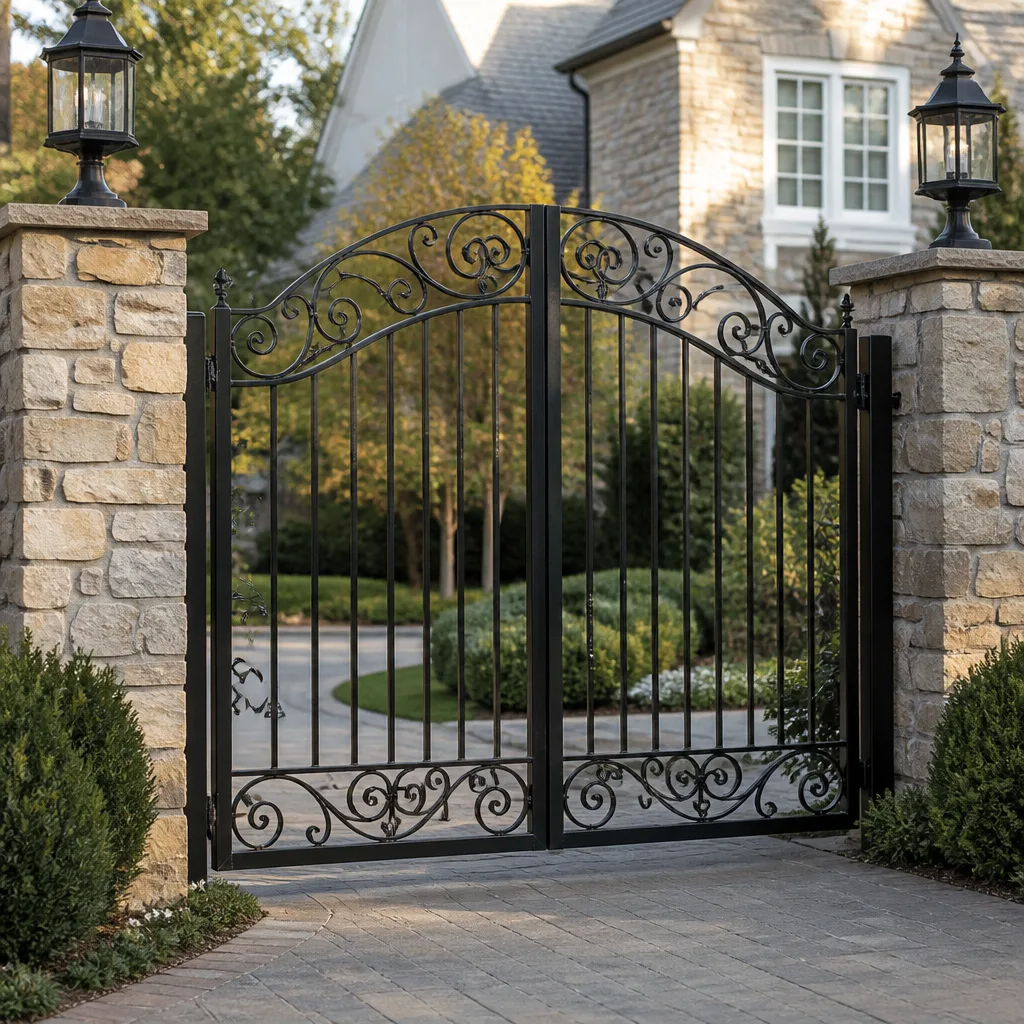
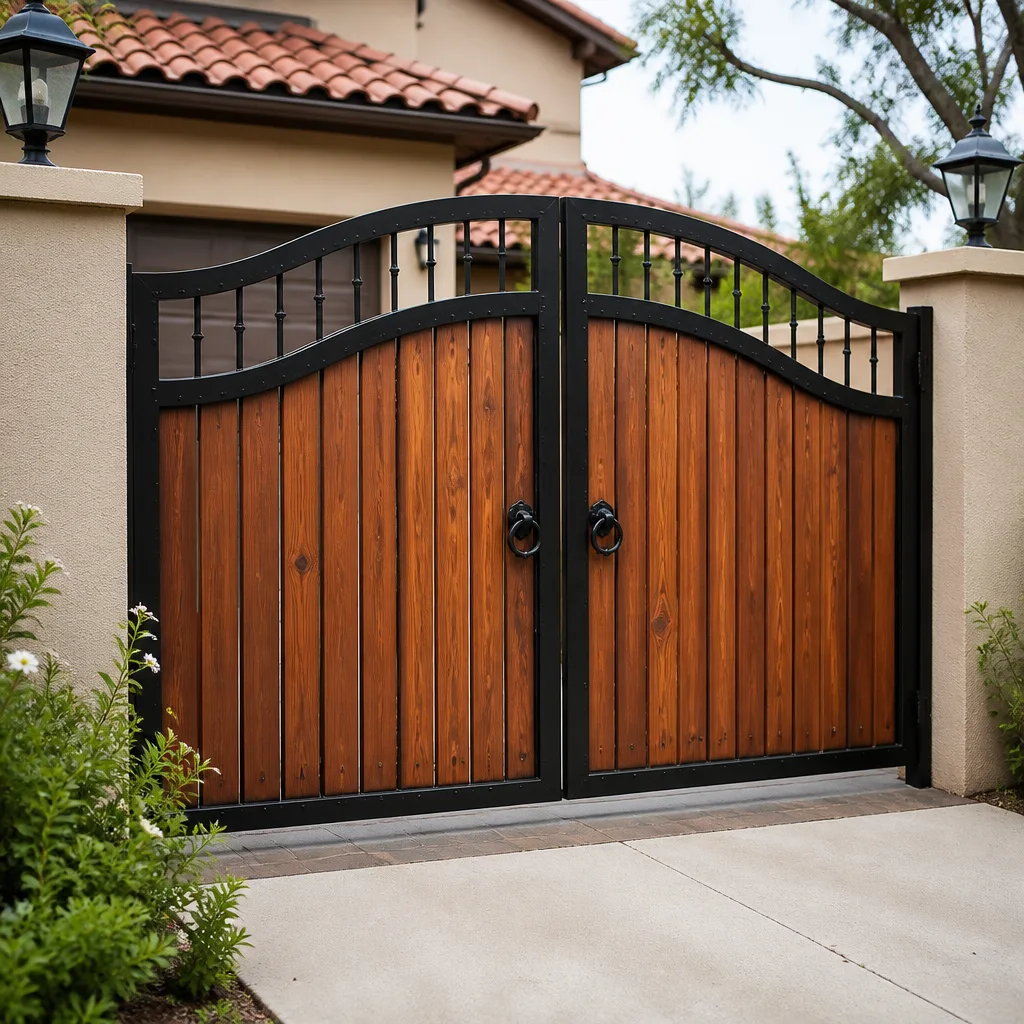
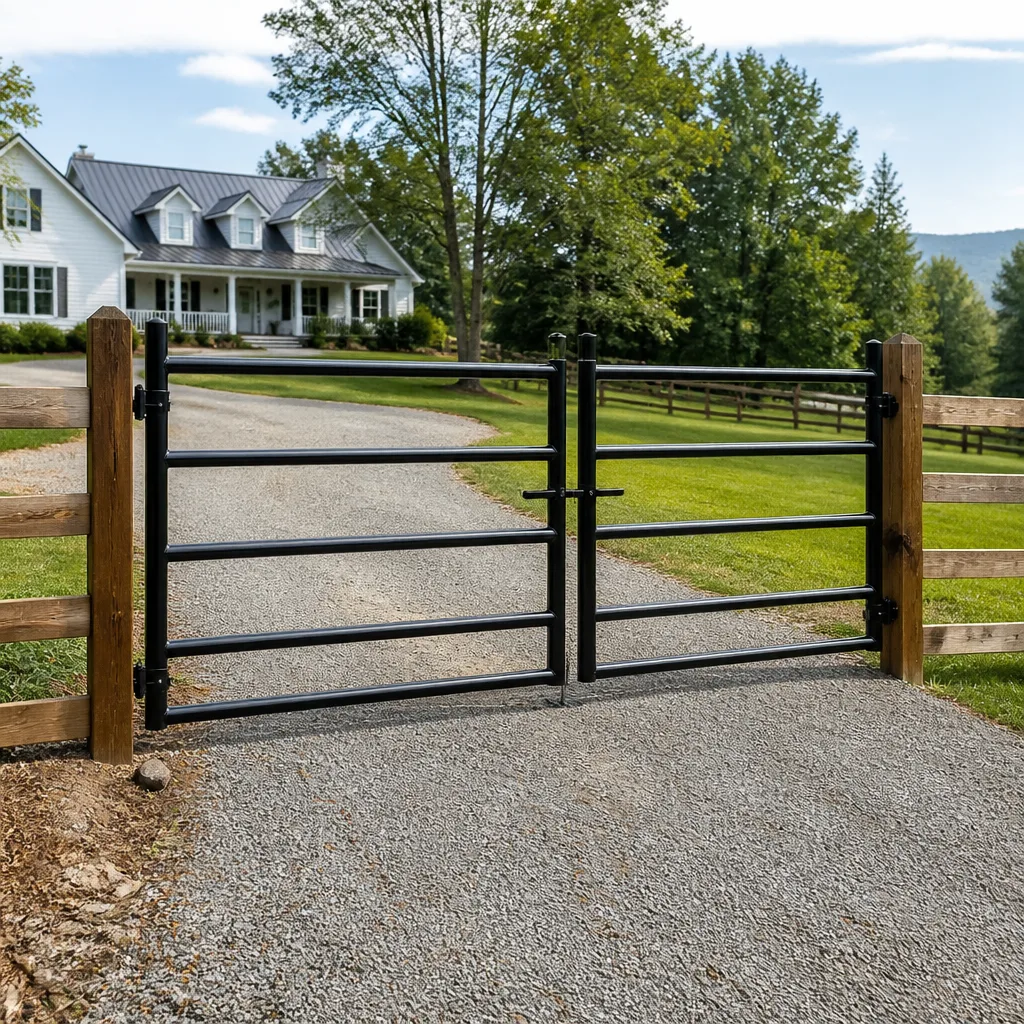
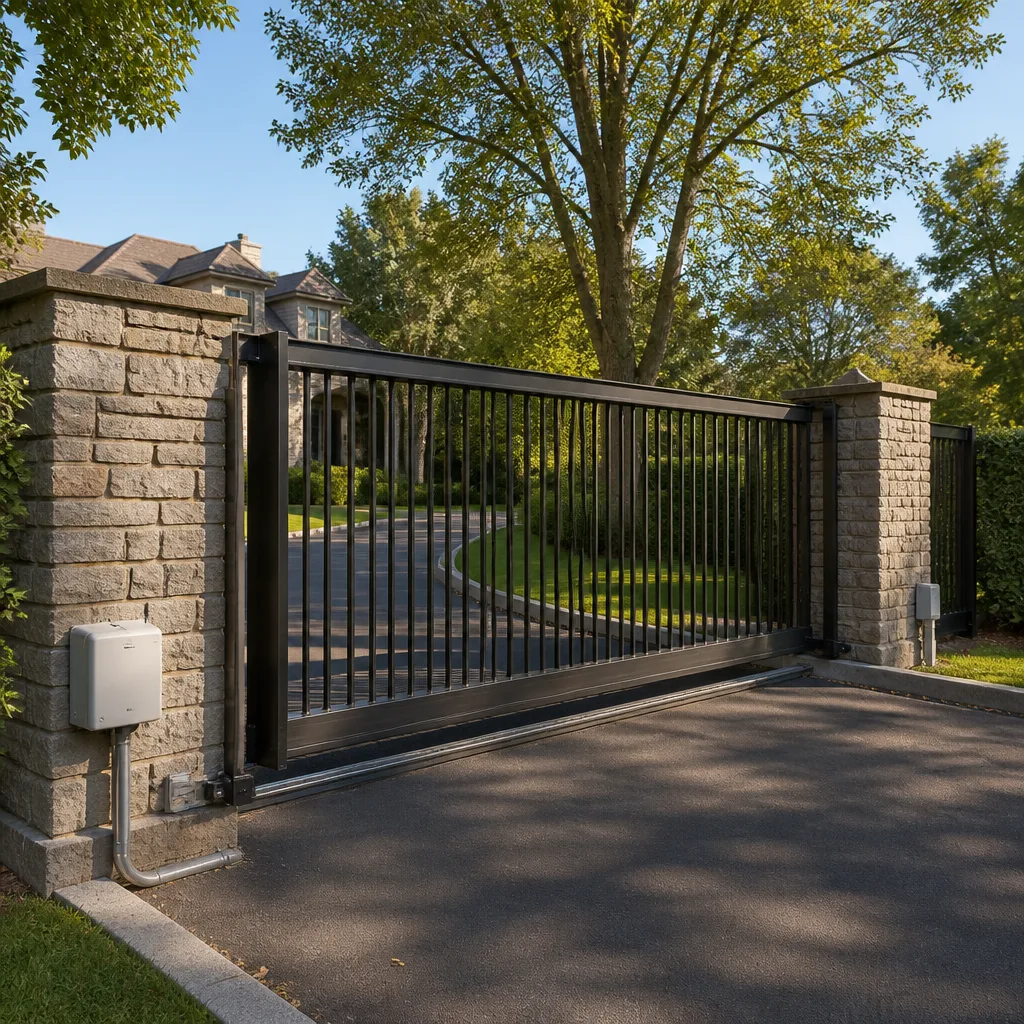
 Before
 After
After Before
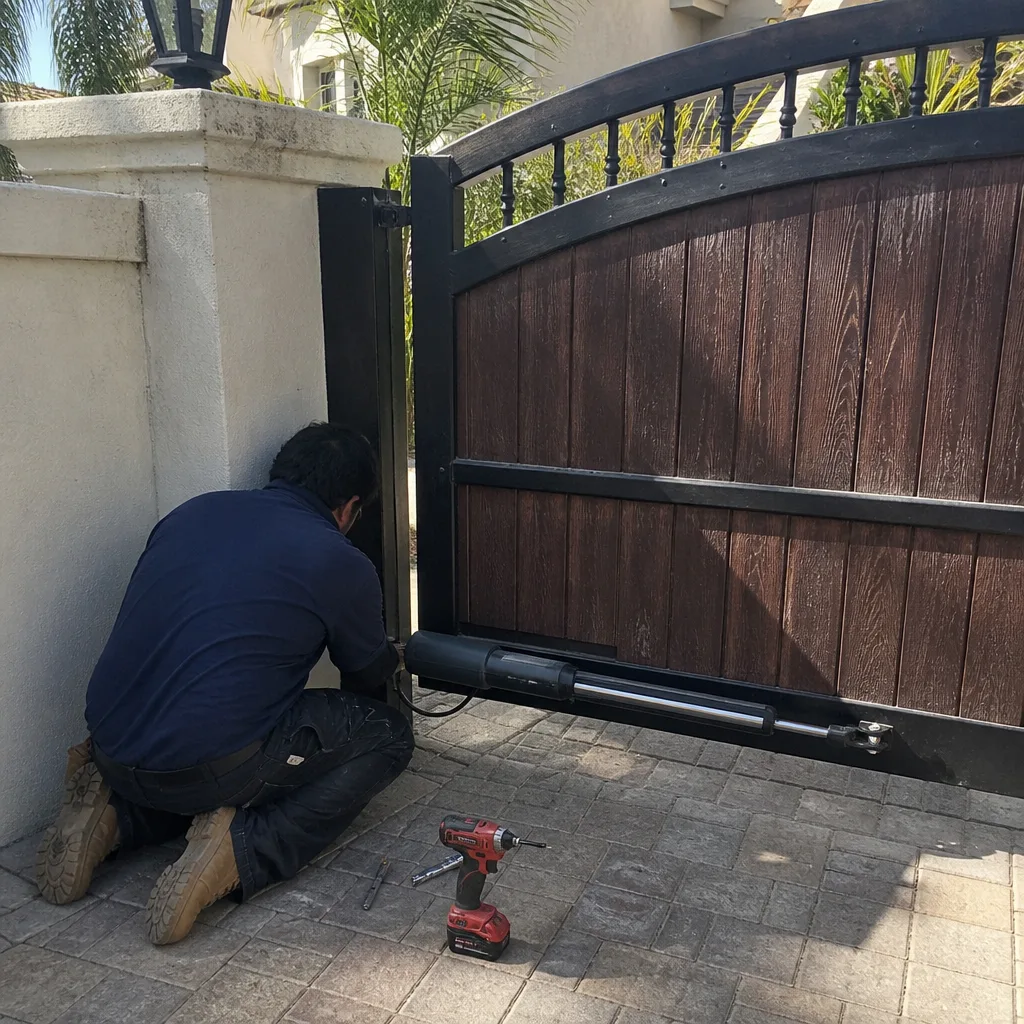 After
After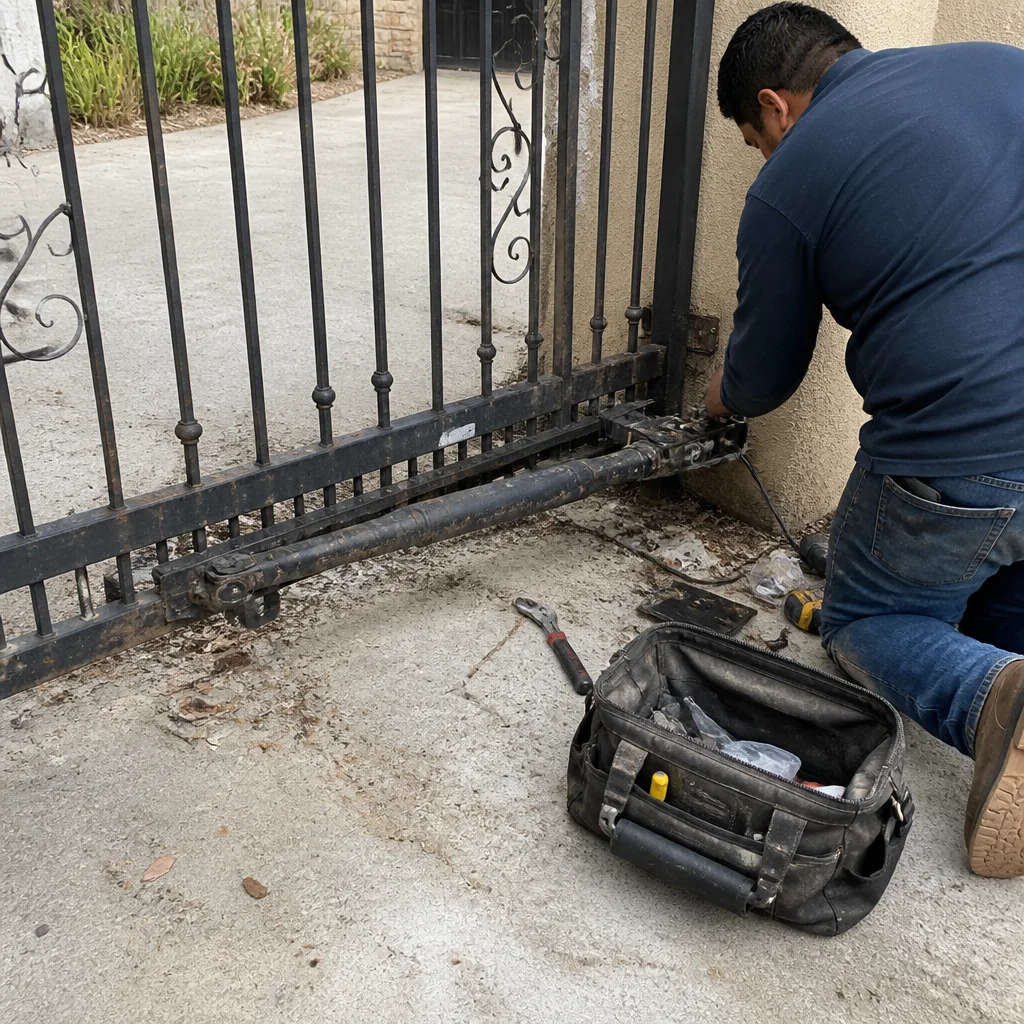 Before
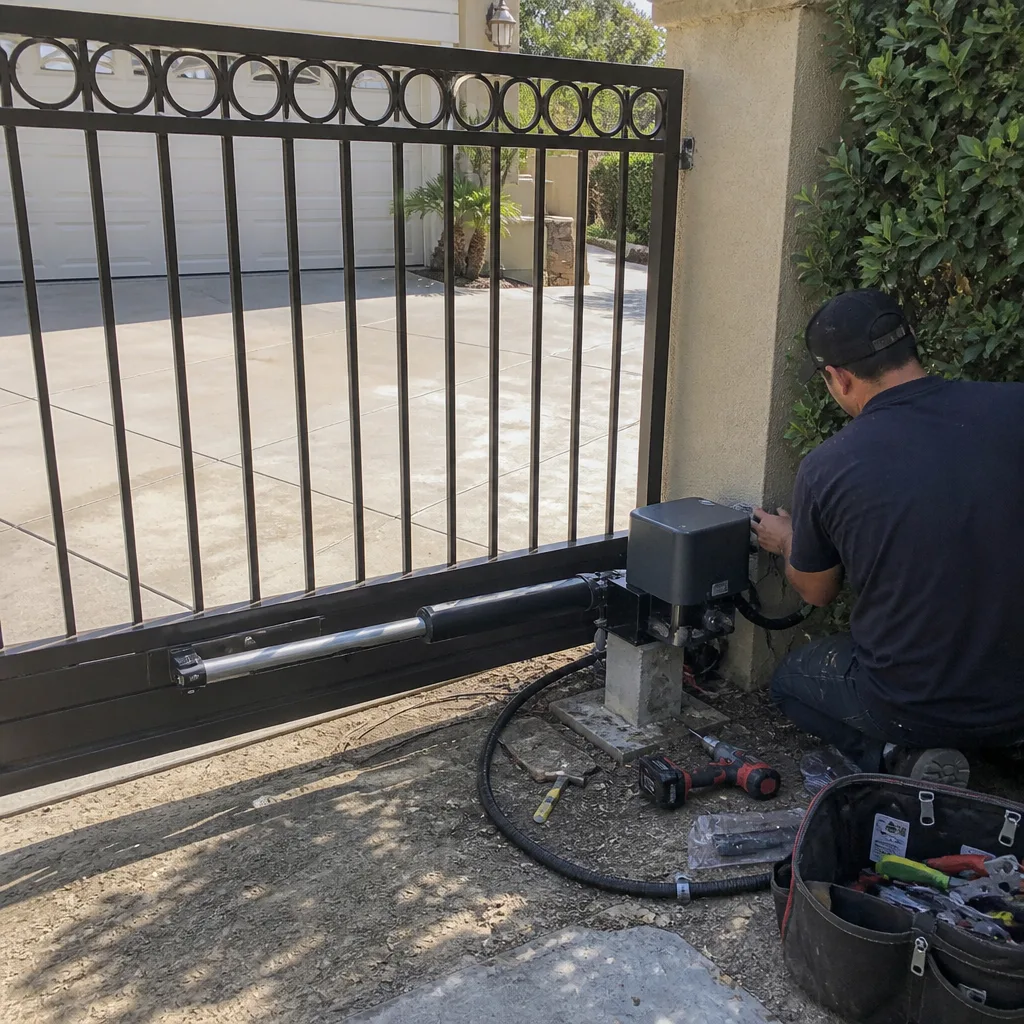 After
AfterGate Repair Maintenance Checklist for Agoura Hills Homeowners
Most Agoura Hills homeowners don’t notice their driveway gate until the morning it refuses to open. That moment usually comes on a Tuesday at 7:15 a.m., with a car idling in the driveway and a meeting across town. Here’s what nobody tells you: the failure didn’t happen that morning. It started eight months earlier, as a faint scrape in the hinge or a two-second hesitation in the motor. A gate that gets ten minutes of attention twice a year will almost always outlast one that gets ignored until breakdown day. This guide gives you a practical, season-by-season maintenance checklist built for Agoura Hills specifically: our temperature swings, our chaparral dust, our road salt avoidance and our fire-season power quirks.
Quick Answer
A proper Agoura Hills gate maintenance routine comes down to this: inspect hinges, wheels, chains, and safety sensors monthly; lubricate moving parts twice a year (spring and fall); test the auto-reverse and battery backup every quarter; and schedule a professional tune-up annually, ideally in early October before Santa Ana season. Homeowners who follow this checklist typically get 15 to 20 years out of a gate opener and 25-plus from a well-built steel gate, versus 8 to 12 years for neglected equipment.
Table of Contents
- The Monthly 10-Minute Inspection
- Agoura Hills Seasonal Maintenance Calendar
- What to Lubricate, What to Leave Alone
- Safety Features: Testing and What They Do
- How Agoura Hills Climate Stresses a Gate
- The Repairs We See Most Often in Agoura Hills
- Common Mistakes to Avoid
- When to Call a Professional
- Frequently Asked Questions
- The Bottom Line
The Monthly 10-Minute Inspection
This is the single highest-value habit in gate ownership. Once a month, walk your gate through two full open-and-close cycles and use your eyes and ears. You’re not fixing anything; you’re catching small problems before they become a $700 motor replacement. In Agoura Hills, where gates sit on slopes and fight against gravity constantly, these ten minutes matter more than they do in flatter communities like Thousand Oaks or Westlake Village.
Step-by-Step Monthly Walkthrough
- Open and close the gate twice. Listen for scraping, grinding, clicking, or any sound that wasn’t there last month. A healthy gate should be quiet enough to hear a conversation over.
- Watch the gate’s path. Does it wobble? Does it hesitate or jerk at any point? Does it slow near the end or slam into the stop? Any of these says something is wearing.
- Check the hinges. On a swing gate, grab the gate at its farthest edge from the hinge and lift. More than a quarter-inch of play means bushings or hinge bearings are wearing. On a slide gate, push sideways on the gate mid-span and watch the guide rollers.
- Look at the chain or belt. On slide gates with chain drives, the chain should deflect no more than about half an inch at the center. Much more than that and it needs tensioning. A slack chain eventually jumps the sprocket and jams the gate.
- Clear the track. For slide gates, sweep or blow out the V-track. Acorns, eucalyptus bark, gravel, and dried plant debris are the four horsemen of Agoura Hills gate jams.
- Check the safety sensors. These are the photo eyes mounted near ground level on either side of the gate opening. Wipe the lenses with a dry cloth. Test by pressing your gate’s obstacle-detection or auto-reverse function (instructions below in the safety section).
- Inspect the gate’s frame and welds. Run your hand along the major welds and watch for hairline cracks, especially at corners and where the gate meets the hinge plates. Gate frames flex thousands of times a year. A crack caught at one inch is a $40 weld. At six inches, it’s a new gate.
Agoura Hills Seasonal Maintenance Calendar
Agoura Hills has a climate most of the country envies: mild winters, long springs, and a dry season that stretches from May to October. But that dryness is the root of most gate wear here. Dust is abrasive. It works into bearings, chains, and control boards, and it acts like sandpaper on anything that moves. Follow this calendar and you’ll stay ahead of the climate instead of fighting it.
Agoura Hills Gate Maintenance Calendar
January - March (cool, occasional rain):
- Lubricate all moving metal parts after the first week of dry weather following rain
- Check for rust bloom on steel components, especially at weld points and bolt heads
- Inspect gate opener cover for water intrusion; reseal if needed
- Test battery backup - cold mornings drain batteries faster
April - June (warming, dry):
- Full lubrication pass, including chain (if applicable) and hinge bearings
- Inspect all electrical connections; tighten any that have worked loose
- Clear drainage channels and weep holes at the gate’s base
- Check photo-eye alignment after spring planting and irrigation work
July - September (hot, dusty, fire season):
- Blow out the motor housing and control board monthly - dust is heaviest now
- Watch for gate metal expanding in high heat; a gate that binds at 2 p.m. but works at 8 a.m. is a classic sign of insufficient clearance
- Check that the gate’s manual release still works - you’ll want this during a power shutoff
- Test the gate opens smoothly by hand with the motor disengaged; this isolates motor problems from mechanical problems
October - December (Santa Ana winds, cooler nights):
- Schedule your annual professional tune-up - the $89 seasonal check is cheap insurance before winter
- Inspect all weld joints for stress cracks after a season of high-wind loading
- Check the gate’s wind bracing and reinforcement; Santa Anas put enormous lateral force on wide gates
- Lubricate again before the first rains arrive
- Confirm the gate’s limit switches are set correctly after a summer of thermal expansion cycles
One note from years of Agoura Hills gate work: homeowners often think their gate is “fine” because it opens. A gate can be functional and still be wearing out its motor three times faster than it should. The tune-up catches that. That’s why the calendar matters.
What to Lubricate, What to Leave Alone
Lubrication is the most misunderstood maintenance task we see. Too many homeowners grab whatever spray can is in the garage and go to work. On an Agoura Hills gate, the wrong lubricant in the wrong place does more damage than no lubricant at all. Here’s the exact breakdown.
Parts That Need Lubrication (twice a year minimum)
- Hinge pins and bushings - use a white lithium grease or a heavy-duty silicone spray. You want a lubricant that clings and doesn’t wash away.
- Chain drives (slide gates) - use a dedicated chain lube or a light machine oil. Do not over-apply; a chain dripping with oil collects dust and becomes a grinding paste.
- Guide rollers and V-wheels - a light silicone spray or dry PTFE lubricant works well. Grease is too heavy here and attracts the fine dust Agoura Hills produces all summer.
- Latch mechanisms and lock cylinders - a graphite powder or dry PTFE spray. Wet lubricants gum up lock cylinders.
- Pivot points on gate opener arms - white lithium grease, sparingly applied.
Parts to Leave Alone
- Control board and any wiring - never spray lubricant or cleaner near the electronics. Dust is better than conductive residue.
- Photo-eye lenses - wipe dry only. Lubricant clouds the lens and defeats the sensor.
- Limit switches - these small switches are delicate. Lubricant inside them causes intermittent failures that are maddening to diagnose.
- The gearbox (internal) - if the opener’s gearbox is making noise, lubricant won’t fix it. That’s a repair call, not a maintenance item.
For most Agoura Hills gates, plan on two lubrication passes per year: one in March as the rainy season tapers off, one in October before the first real rain. If you live on a dirt road or near open hillside, add a third pass in June. In our experience, homes off Chesebro Road and the canyon communities deal with more airborne dust than the neighborhoods closer to Kanan Road, and their gates show it.
Safety Features: Testing and What They Do
Every automatic gate in Agoura Hills is legally required to have working entrapment protection. Your gate’s manual will spell out exactly which system yours uses, but the basics are standard across the industry. If these features aren’t working, your gate is not just unreliable - it’s dangerous. A moving gate carries enough force to seriously injure a person, a pet, or a child. This is not a “get around to it later” item.
Quarterly Safety Test Protocol
- Photo-eye obstruction test. Start the gate closing, then pass your hand or a broomstick through the beam between the two photo-eye lenses. The gate should stop immediately and reverse. If the gate continues closing, the photo eyes are misaligned, dirty, or dead. Fix this immediately.
- Auto-reverse / contact reversal test. With the gate closing, place a solid object (a 2×4 laid flat works) in the gate’s path. When the gate contacts it, the opener should detect the resistance and reverse direction. If the gate keeps pressing, the force setting is wrong or the clutch is too tight. This is a genuine safety hazard.
- Manual release test. Disengage the opener using the release handle or key. Open and close the gate by hand. It should move with reasonable effort and no binding. If it’s hard to move manually, the motor has been working against a mechanical problem - and that problem will eventually kill the motor.
- Battery backup test (if equipped). Cut power to the opener (trip the dedicated breaker or unplug it). Attempt to operate the gate. If the battery doesn’t engage or operates weakly, it needs replacement. Batteries in our hot summers typically last 5 to 7 years.
We’ve serviced gates in Agoura Hills where the photo eyes had been disconnected for years because they “kept false-triggering.” Here’s the reality: a false trigger is always fixable. It’s usually alignment, or direct sun hitting the receiver lens at a certain time of day. Never disable a safety sensor to solve an inconvenience. The risk isn’t worth the thirty seconds it saves.
How Agoura Hills Climate Stresses a Gate
Every climate has a personality, and Agoura Hills has a specific one. Understanding it explains most of the gate problems we see. This isn’t generic advice; it’s what the local environment actually does to steel, motors, and electronics.
The dust problem. Agoura Hills sits in a Mediterranean climate with a dry season that runs six months or more. The hillsides around town are covered in fine, powdery soil that becomes airborne with any wind, construction, or passing truck. This dust is electrically neutral enough to settle on circuit boards and hydroscopic enough to hold moisture when the marine layer rolls in. It’s a combination that shortens the life of control boards more than any other single factor we see.
Santa Ana winds. In October and November, the winds arrive. A wide driveway gate becomes a sail. A 16-foot gate in 50 mph winds experiences lateral forces measured in hundreds of pounds. Gates that were never properly reinforced, or whose welds were marginal from the start, begin to crack at stress points. The wind doesn’t just push the gate; it sets up a rhythmic flexing that works the metal like bending a paperclip. Small flex isn’t a problem. Uncontrolled flex absolutely is.
Temperature swings. Our summer afternoons often exceed 90°F while winter nights dip into the 30s. A 60-degree daily or seasonal swing means metal expands and contracts measurably. A gate with proper clearance handles this silently. A gate installed too tight binds at 3 p.m. in July but works perfectly at 7 a.m. The opener’s motor compensates by pulling harder, which shortens its life. Proper installation with correct clearance is the fix.
Coastal-marine influence. Even though Agoura Hills is inland, we’re close enough to the coast that morning marine-layer humidity reaches us, especially in neighborhoods on the southern and western slopes. This humidity, combined with the dust mentioned above, creates ideal conditions for corrosion at unprotected metal surfaces. Steel gates with chipped powder coating will rust here faster than homeowners expect.
Power shutoffs. During high-fire-risk days, Southern California Edison’s public safety power shutoffs can cut electricity for hours or days. Homes with battery-backed gate openers sail through these events. Homes without them have gates that won’t move until a technician or a manual release comes into play. If your Agoura Hills home experiences periodic shutoffs, a battery backup is not a luxury.
The Repairs We See Most Often in Agoura Hills
After more than four decades of gate work across Southern California, and years of focused service in and around Agoura Hills, certain repair patterns emerge. These are the failures that account for the majority of our service calls in this area. Knowing what fails, and why, helps you watch for the right warning signs.
Capacitor failure. The start capacitor inside most gate opener motors is a cylinder about the size of a small pill bottle. When it fails, the motor hums but doesn’t turn, or starts slowly with reduced torque. Heat kills capacitors, and Agoura Hills gets plenty of heat. We replace failed capacitors regularly on homes throughout the area - sometimes on openers as young as 3 or 4 years old when they’re exposed to direct afternoon sun.
Photo-eye misalignment and failure. Mentioned above, but worth repeating: this is the most common “my gate won’t close” diagnosis in Agoura Hills. Sun angles shift, posts settle, gardeners bump sensors with mowers, and suddenly the receiver can’t see the transmitter. The gate interprets this as an obstruction and refuses to close. Alignment is usually a 10-minute fix; replacement takes maybe 30 minutes.
Hinge and bracket wear. Gravity never stops working. A swing gate’s entire weight hangs on two or three hinges, and over 15 or 20 years, the bushings inside those hinges wear. The gate begins to sag, scrapes on the bottom, and eventually the opener’s arm has to work against the sag on every single cycle. Catching hinge wear early is the difference between a $50 bushing replacement and a $900 hinge post rebuild.
Chain slack on slide gates. Slide gates with chain drives stretch over time. A chain that’s run slack for too long eventually jumps the drive sprocket and catches, sometimes damaging the chain itself and the motor’s output shaft in one ugly event. Ten minutes of tension adjustment twice a year prevents this entirely.
Control board corrosion. Dust and humidity find their way into the opener’s chassis. Over time, fine dust coats the board, absorbs moisture from the marine layer, and creates enough surface conductivity to cause random glitches: gates that open on their own, gates that stop mid-travel, remotes that stop working. If your gate starts behaving erratically, don’t keep cycling it. Call for a diagnosis.
Welded joint fatigue. Every weld on a gate is a stress concentration point. The repeated load-unload cycles of daily operation, amplified by wind loading during Santa Anas, eventually initiates hairline cracks at the highest-stress welds. As noted above, early detection means a simple repair weld. Late detection means structural gate replacement.
Common Mistakes to Avoid
- Ignoring change. A gate that sounds different, moves differently, or behaves differently is telling you something. “It’s always done that” isn’t a maintenance plan; it’s how 40-year-old motors die avoidable deaths in Agoura Hills garages and gate posts every year.
- Using WD-40 as a catch-all lubricant. WD-40 is a water displacer, not a lubricant. It works for a few days, then leaves the metal drier than before. Use proper lubricants as noted above, and your gate parts will live longer.
- Power-washing the gate and opener. High-pressure water from a power washer forces its way past seals and into electronics, motor windings, and bearing races. We see it every spring: a homeowner spring-cleans the driveway, points the power washer at the gate, and then calls us because the opener fried. Low-pressure garden hose and a soft brush only.
- Adjusting the force settings to “fix” a binding gate. When a gate binds due to sag or misalignment, the answer is to fix the mechanical problem, not crank up the motor’s force setting. Higher force means higher current draw, more heat, and shorter motor life. It’s also a safety issue; excessive force defeats the auto-reverse protection.
- Deferring hinge repair because “the gate still opens.” Hinge wear accelerates non-linearly. What starts as a slow sag becomes a sudden, complete failure with little warning. If you can feel play in the hinges during your monthly inspection, address it within weeks, not years.
- Landscaping too aggressively around the gate. Fast-growing plants, irrigation overspray, and mulch piled against the gate posts all accelerate corrosion and interfere with photo-eyes, tracks, and clearance. Keep plants trimmed back at least 12 inches from the gate’s full travel path.
- Forgetting the manual release exists. We meet homeowners who’ve owned their gate for a decade and never once used the manual release. Then a power outage hits and they’re trapped or locked out. Know where your release is, and test it twice a year. It takes two minutes and it turns an emergency into an inconvenience.
When to Call a Professional
Some gate work is doable with basic tools and a careful hand. Some absolutely is not. Here’s the line: if a repair involves high-tension springs, welded structural steel, or anything connected to the opener’s electrical system, it’s time for a trained professional. Gate springs and counterbalance assemblies store enormous energy and can cause serious injury if released incorrectly. A gate that’s been jamming, sparking, or making grinding sounds from the motor should be disconnected and evaluated, not “adjusted one more time.”
If your Agoura Hills gate is misbehaving, Ironworks Gate Co. offers free estimates - call (213) 293-3886 and a live person answers, 24 hours a day. Victor Salinas has been leading gate work since long before he founded Ironworks, and the company stands behind every job with the 90-Day Done Right Promise. If it’s not right, we come back and make it right. That’s been true for over 42 years.
Frequently Asked Questions
Monthly for the 10-minute walkthrough described above, and a full professional tune-up once a year. In Agoura Hills, the ideal time for the annual service is early October, before Santa Ana winds and winter rains arrive. Ironworks Gate Co. home offers an $89 seasonal tune-up that covers the full inspection and adjustment.
In Agoura Hills, with regular maintenance, expect 15 to 20 years from a quality opener like a LiftMaster or FAAC. Without maintenance, 8 to 12 years is more typical. The difference comes down to lubrication, clean electrical connections, proper force settings, and keeping dust out of the chassis.
Photo-eye misalignment is the single most common issue we diagnose. The second is capacitor failure from heat exposure. Both are usually repairable in a single visit. Neither should be ignored, because both become more expensive problems when left alone.
If the gate’s steel is sound and the welds are intact, repair is almost always the better call. Gates built with proper steel and good welding can last 30 to 40 years or more with new hinges, bushings, and a modern opener. If the frame has multiple cracked welds or the steel is rusted through anywhere, replacement becomes more cost-effective. A free estimate from a gate specialist will settle the question quickly.
Yes, and they’re increasingly common in areas where running conduit for power is impractical or expensive. Agoura Hills gets plenty of sunshine for solar openers most of the year. However, during stretches of heavy overcast or winter’s shorter days, the battery bank does the heavy lifting. A properly sized solar panel and battery system works year-round in our climate. Brands like Mighty Mule and Ghost Controls offer solid solar-compatible openers.
We rebuild existing gates whenever the structure is salvageable. That includes re-welding deteriorated joints, replacing hinges and brackets, straightening sagged sections, and repainting or powder-coating. We’ll tell you honestly if replacement is the smarter spend. The estimate is free, and the decision is yours without any pressure. Call (213) 293-3886 and we’ll come look.
The Bottom Line
A driveway gate is a long-term asset, and in Agoura Hills, it’s one that works hard in a climate that doesn’t always make that easy. The gates that last decades aren’t the expensive ones or the fancy ones. They’re the ones that got ten minutes of attention every month, proper lubrication twice a year, a professional tune-up every October, and respect for the safety systems that keep everyone protected. None of this is complicated. None of it is expensive, relative to the alternative. And every bit of it is worth doing, because the morning your gate refuses to open is almost always a morning you made six months earlier. Done right, a gate in Agoura Hills will outlive the car in the driveway and probably the one after it.
Written by Victor Salinas, Owner at Ironworks Gate Co., serving Agoura Hills since 2013.