
Last updated August 25, 2026
Free on-site gate assessment - hinges, posts, and your LiftMaster or Nice gate operator checked before anything is quoted
The assessment is free and the quote is the invoice.
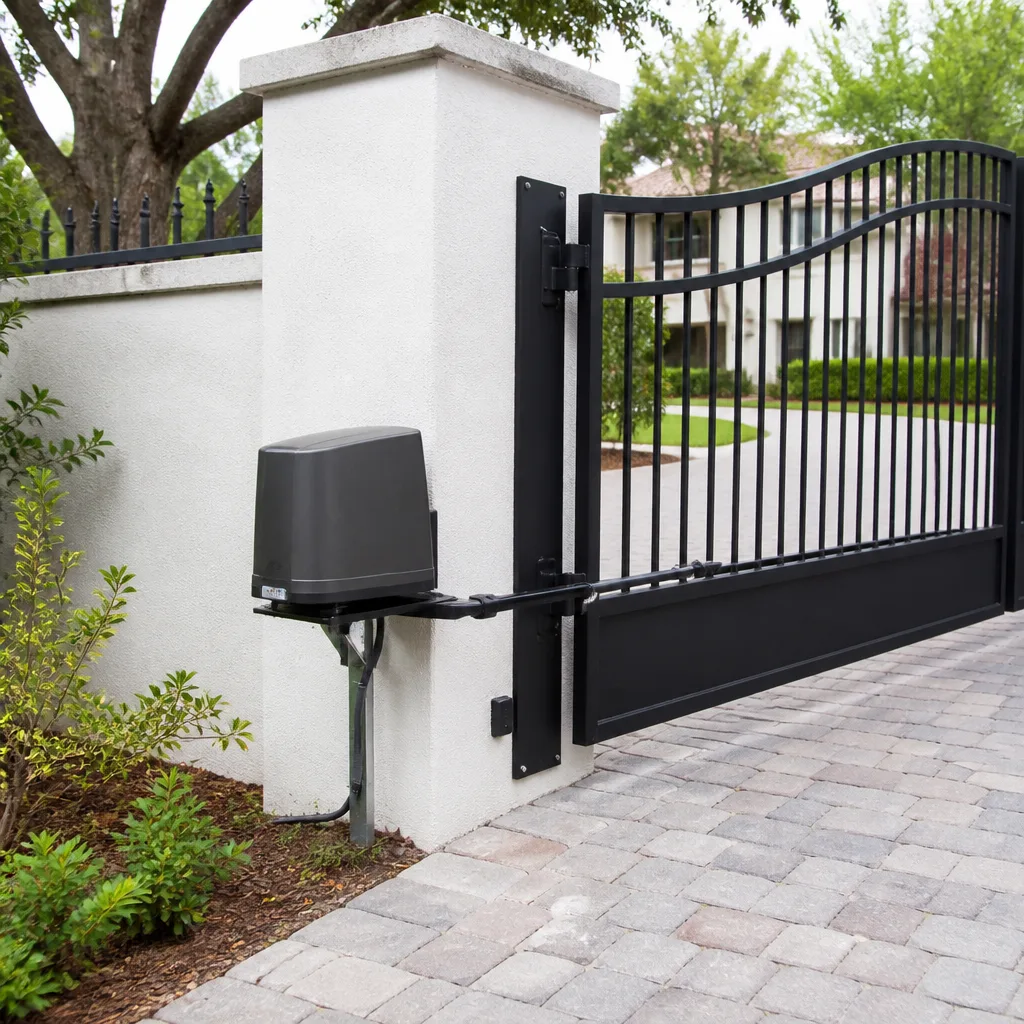
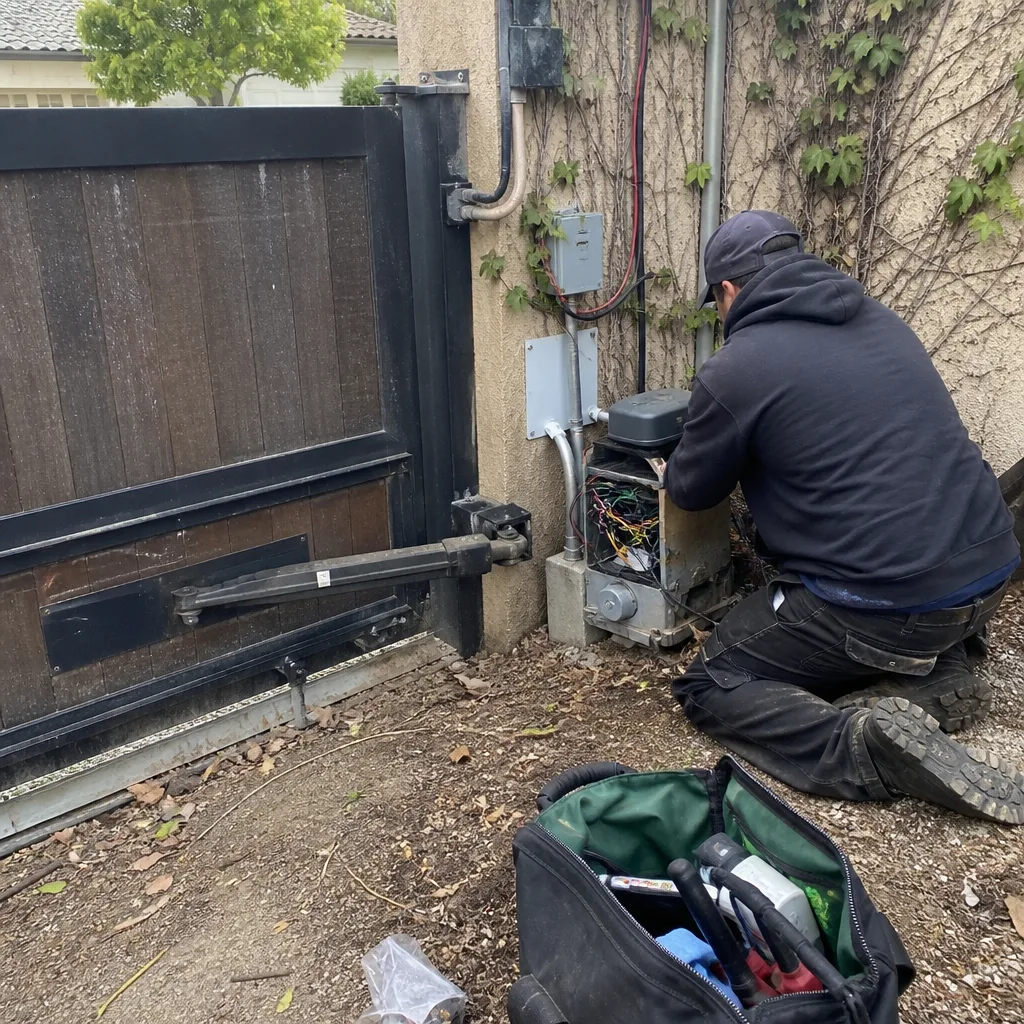 Before
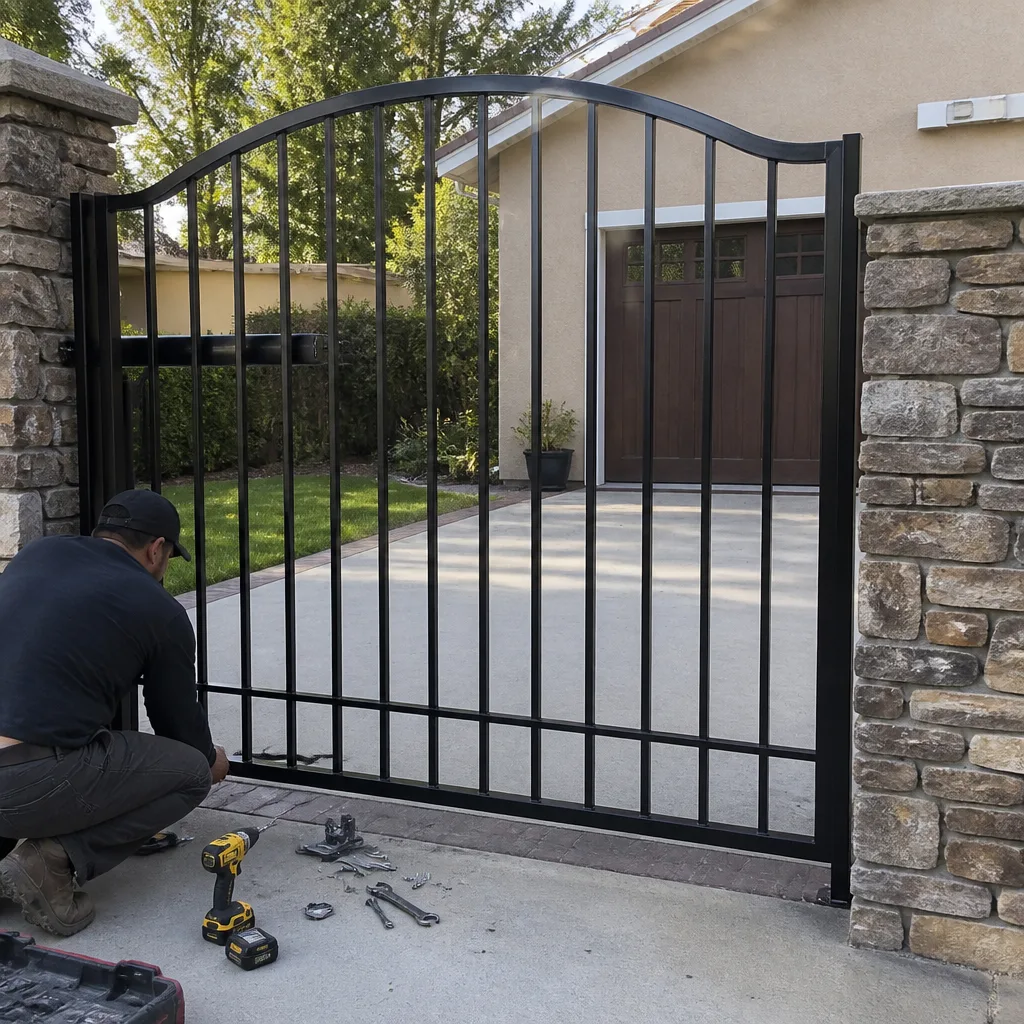 After
After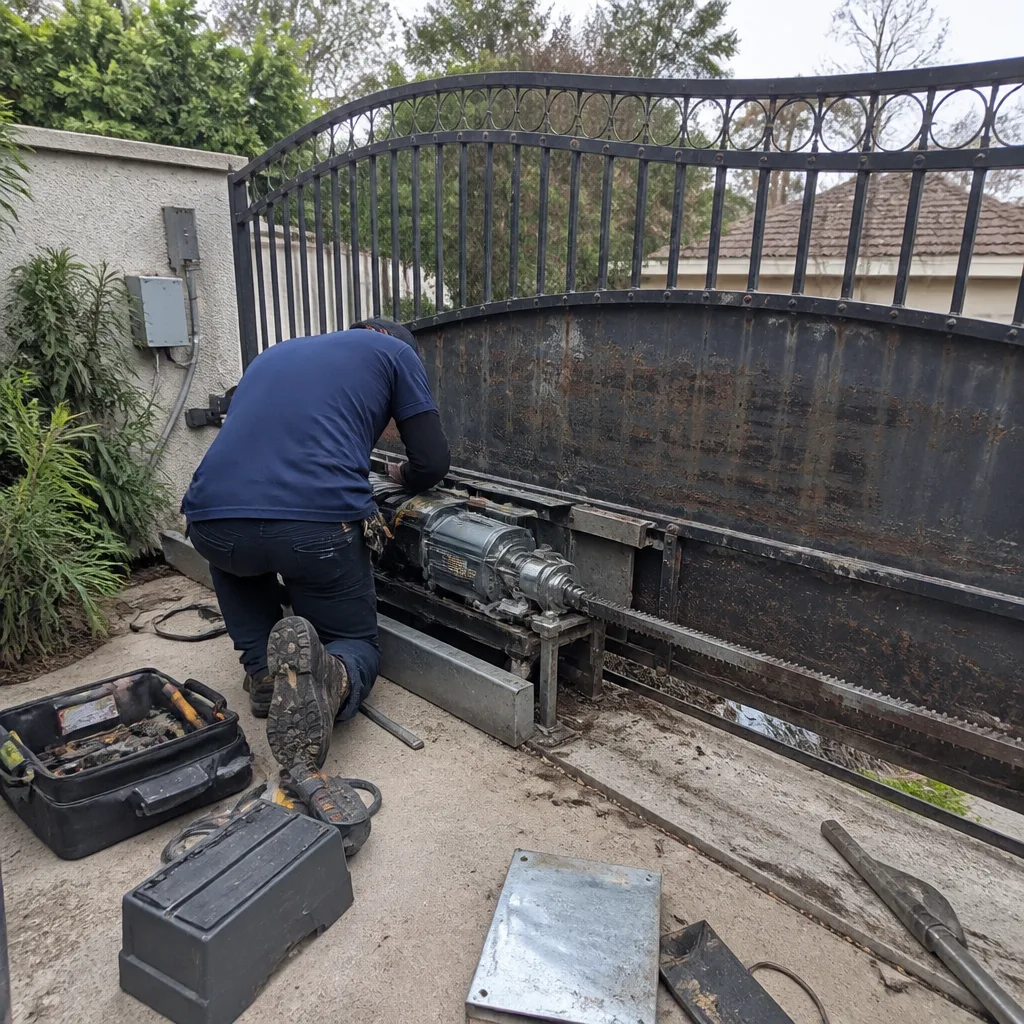 Before
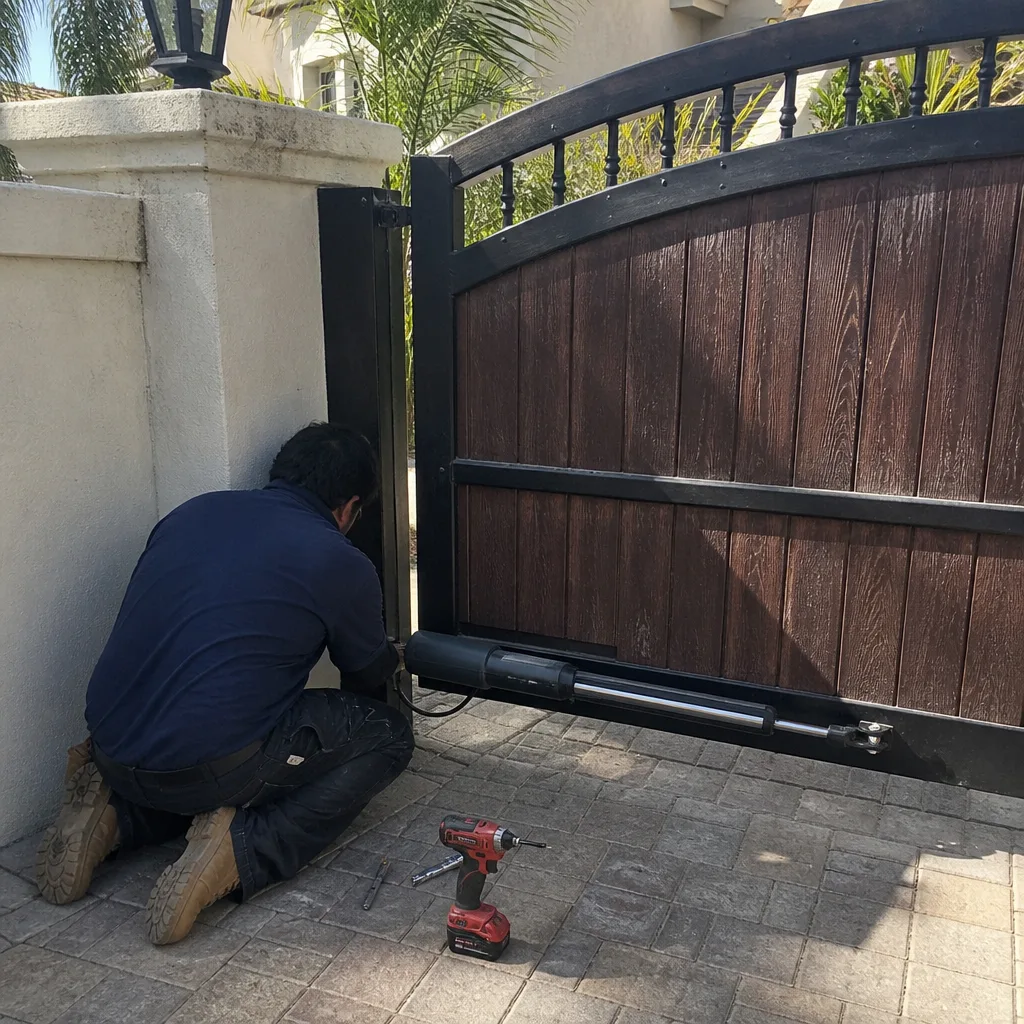 After
After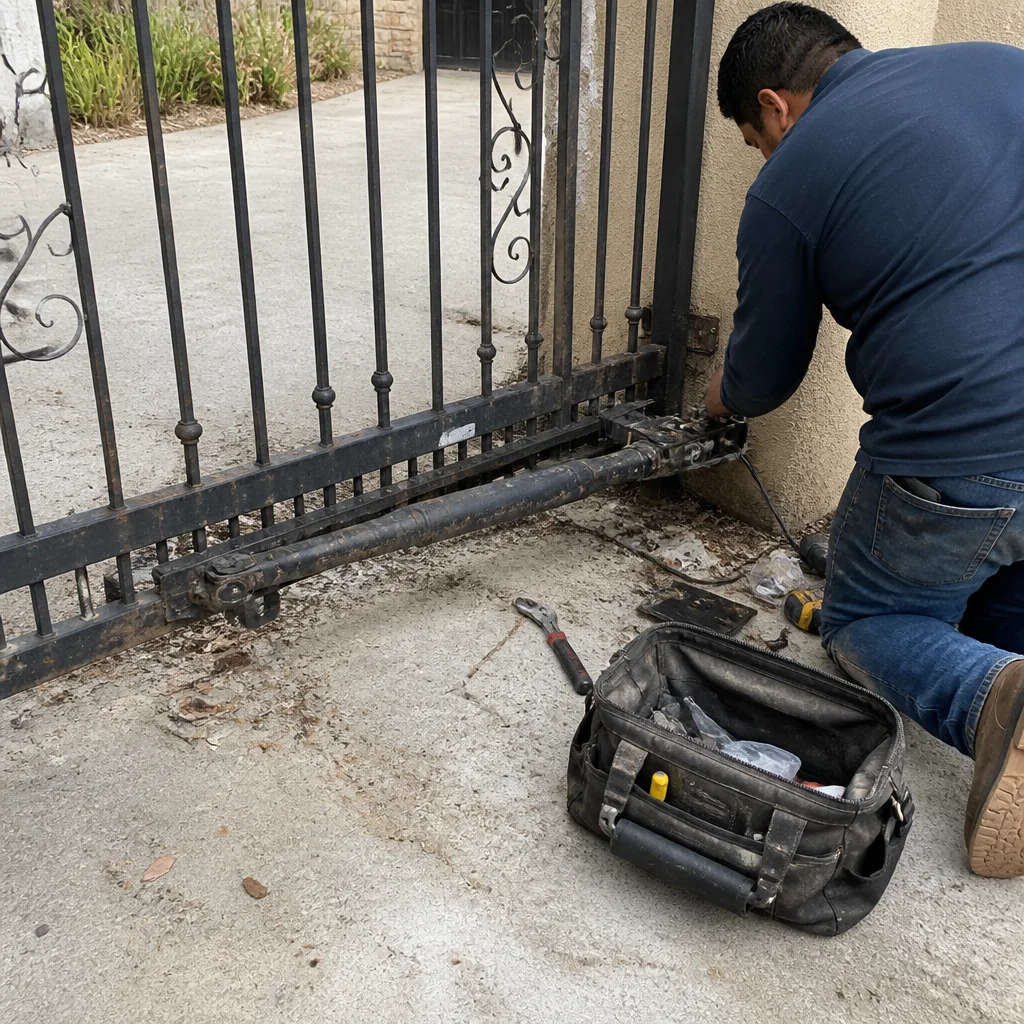 Before
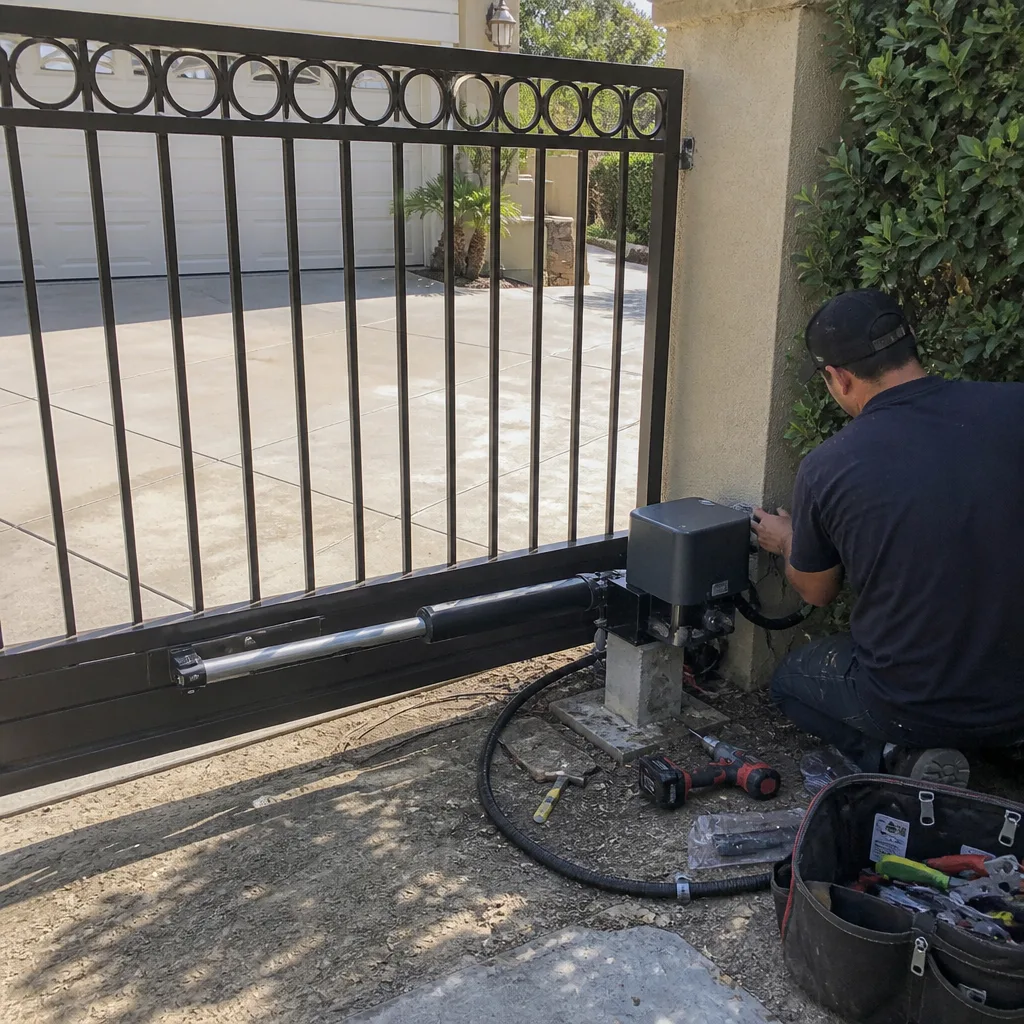 After
AfterGate Repair Permits, Codes & Inspections in CA: What You Need to Know
Most California homeowners don’t discover they need a permit for gate work until the inspector is already standing in the driveway. That moment costs them two to four weeks of delays and a fine that averages $500 in Los Angeles and Ventura counties. This guide will walk you through what actually requires a permit, which codes apply to your gate, what an inspector looks for, and how to avoid the three most expensive mistakes we see in Agoura Hills and surrounding communities. By the time you finish reading, you’ll know exactly what to ask your contractor before a single bolt gets turned.
Quick Answer
In California, driveway gate permits are required when the work involves a new gate installation, a gate that exceeds 6 feet in height, or any modification to the gate’s automated operator and safety systems. Gate repairs that replace existing parts without changing the gate’s size, height, or automation typically do not require a permit, but they must still meet current California Building Code (CBC) safety standards including the UL 325 entrapment protection requirements. Most residential gate work falls under the California Residential Code Chapter 31 for pedestrian gates and the California Building Code Chapter 10 for vehicle gates.
Table of Contents
- Do You Need a Permit for Gate Work? The 5-Minute Test
- California Codes That Govern Gates: CBC, CRC, and UL 325
- Safety Sensors and Entrapment Protection: What the Inspector Checks First
- Setback and Clearance Requirements: Why Your Gate Has to Slide the Right Way
- The Inspection Process: Step by Step from Application to Approval
- Agoura Hills Specific Requirements: What Your Local Inspector Enforces
- Fire Department Access: The Overlooked Requirement That Fails Inspections
- Common Mistakes to Avoid
- When to Call a Professional
- Frequently Asked Questions
- The Bottom Line
Do You Need a Permit for Gate Work? The 5-Minute Test
Here is the simplest way to think about it. If the work changes the structural envelope of the gate or the way it operates, you need a permit. If you are replacing a broken hinge with the same size hinge, or swapping a worn roller for an identical roller, you are performing a repair and no permit is required. That distinction is clear in the California Residential Code, but the gray area sits on either side of it.
Walk through these five questions before you call anyone:
- Is this a new gate installation? If the gate and posts are going in for the first time, you need a permit. This includes replacing an old gate with one of a different size or weight class. In Agoura Hills, we have replaced several 1990s-era wrought iron gates with modern steel and composite gates that weigh two hundred pounds more. The heavier gate requires a new concrete footing and a new post embedment calculation, which triggers the permit requirement even when the footprint looks the same.
- Is the gate over 6 feet tall? California code treats gates over 72 inches as structures subject to wind load and anchoring requirements. Most decorative estate gates in the Agoura Hills area sit between 5 and 7 feet, so this threshold gets crossed often.
- Are you adding an automatic opener where there was none? This is the single most common permit trigger we see. The automation changes the gate from a passive structure to an active machine with entrapment and safety requirements under UL 325. No city in California will skip this one.
- Are you relocating the gate or changing its swing direction? Moving a gate post even eighteen inches changes the setback, the swing arc, and the clearance from the street. That is a structural change and it is permit work.
- Are you replacing the gate post or the concrete footing? The footing is what holds everything during a high wind event or an impact. Any change to the footing means the engineer is involved, and the permit follows.
If you answered yes to any one of those, plan on a permit. It is not a punishment. It is a record that the work was done to a standard that keeps you safe and keeps your homeowner’s insurance valid. We have seen insurance claims denied after an unpermitted gate installation failed and damaged a car, and that is a conversation nobody wants to have after the fact.
California Codes That Govern Gates: CBC, CRC, and UL 325
Three separate sets of rules govern gate work in California, and they do not always overlap neatly. Understanding which one applies to your project will save you from paying for corrections your contractor should have caught on day one.
The California Building Code (CBC) covers vehicle gates at single-family homes and estate properties. Chapter 10 deals with means of egress, which includes how your gate interacts with the public sidewalk and the street. The critical sections for homeowners are the wind load requirements for gates over 6 feet tall and the anchoring standards for gate posts. A gate is essentially a sail mounted on two vertical posts, and in the Santa Ana wind events that hit Agoura Hills each fall, a poorly anchored gate can pull its posts out of the ground and land on a car or a person.
The California Residential Code (CRC) covers pedestrian gates, garden gates, and any gate that is not a vehicle gate. The most important rule here is the pool barrier code. California is strict about self-closing, self-latching gates around pools, and a gate that does not pass this inspection can hold up the final sign-off on your entire property.
UL 325 is not a code by itself. It is a safety standard published by Underwriters Laboratories that the California Electrical Code adopts by reference. UL 325 sets the entrapment protection rules for automated gates. Any gate operator installed, replaced, or modified after the current UL 325 revision must include two independent means of entrapment protection: a primary device, typically a sensor or an edge, and a secondary device, typically the motor’s built-in current sensing. A technician who shows up with a single photocell and calls it good is not meeting code, no matter how convincing the invoice looks.
One more code matters in practice: the California Fire Code. Section 503 covers fire apparatus access. Your gate cannot block the driveway approach in a way that prevents a fire engine from positioning. We will cover that more in the fire access section below because it fails more inspections in the Conejo Valley than any other single issue.
Safety Sensors and Entrapment Protection: What the Inspector Checks First
We replaced a gate operator on a property off Kanan Road last year where the previous installer had mounted a photocell at knee height and pointed it at a bush. The owner had no way of knowing. The sensor was technically there, technically wired, and completely useless. That is what an inspector is looking for when they walk up to your gate with a clipboard.
Entrapment protection is the heart of UL 325, and California inspectors have gotten methodical about it because gate entrapment injuries are permanent and catastrophic. Here is what the inspector will actually check, in the order they check it:
- Presence and placement of photo eyes. The photo eye or edge sensor must be positioned so that a person standing anywhere in the gate’s swing path or slide path breaks the beam and stops the gate. The sensor height matters. A child on a bicycle is lower than the beam if it is mounted at 36 inches. The inspector will look for sensors mounted to cover the full danger zone, not just the middle of it.
- Contact edges and pressure strips. On slide gates and swing gates that move near a wall or fence line, the inspector will check for a pressure-sensitive edge along the trailing edge and along any surface where a hand or arm could get trapped. These edges stop the gate when they compress. A gate without them, or with a stiffened edge that no longer compresses, is a code violation.
- Reverse on contact. The inspector will block the gate with a test device, usually a 4×4 post or a purpose-built entrapment gauge, and verify the gate reverses. The gate must stop and reverse within two seconds of sensing the obstruction. The motor’s current sensing is measured in pounds of force, and UL 325 sets the maximum force at 40 pounds at any single point in the travel.
- Warning signs. Both sides of the gate must display a warning sign with the operator brand and the statement that the gate can cause serious injury or death. This is the easiest item on the list and the one most often missing. Inspectors in Los Angeles County and Ventura County both write this up consistently.
- Emergency disconnect. There must be an accessible means to disconnect the gate from the operator so a person can push the gate open manually if someone is pinned. This is usually a quick-release mechanism, and it must work without tools.
We service nine operator brands, and the entrapment protection conversation changes with each one. LiftMaster and Mighty Mule use different sensor wiring protocols. FAAC and BFT have different edge configurations. A technician who only knows one brand will not recognize when a sensor from one system was incorrectly paired with another system’s operator, which is a surprisingly common handyman mistake. That kind of incompatibility can pass a visual check and still fail under actual obstruction testing.
Setback and Clearance Requirements: Why Your Gate Has to Slide the Right Way
Every city in California has its own setback standards, and Agoura Hills is no exception. The setback is the distance between your gate and the public right-of-way, and it exists for one reason: so a car pulling into your driveway does not block the sidewalk or the street while waiting for the gate to open.
In the Agoura Hills area, the standard residential driveway gate setback is 20 feet from the edge of the paved roadway, measured from the gate’s closed position to the curb face or the edge of asphalt. That 20 feet is long enough for a full-size pickup or a small SUV to sit fully off the road while the gate cycles. If your gate sits closer than that, the city will require either a different gate design, a faster operator, or a variance.
Swing gates have an additional arc clearance requirement. The gate leaf must not swing over the sidewalk or into the public right-of-way. That rule is absolute. A gate leaf that extends past the property line even for a moment during its swing is a liability the city will not accept, and a permit will not be issued for a design that violates it.
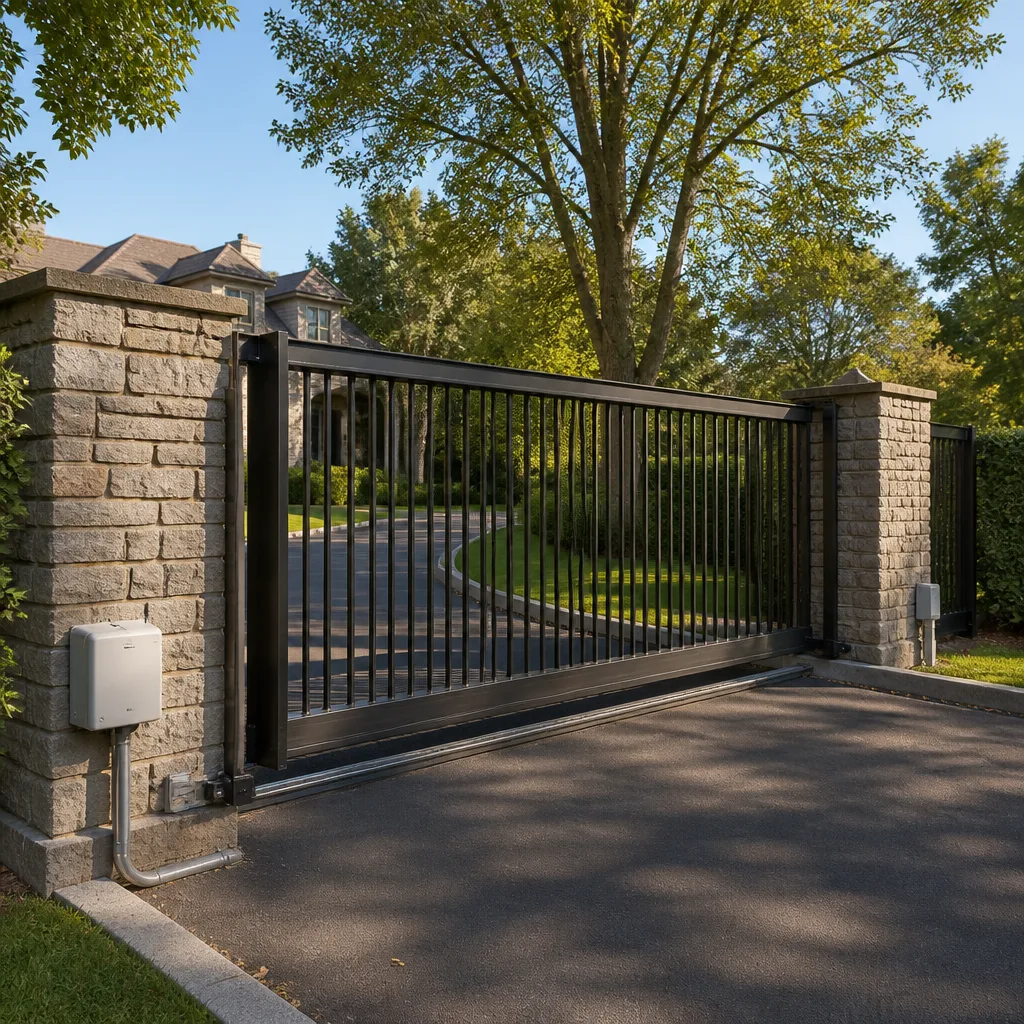
For slide gates, the clearance question is about the run. A slide gate needs a clear horizontal run at least equal to the gate’s width, plus an extra 12 inches for the carrier and the end stop. If your driveway is narrow and the slide run crosses a walkway, the inspector will want to see the walkway protected or the gate rerouted. This is one of the reasons Cantilever slide gates are common on Agoura Hills hillside properties where the running track would otherwise sit in a drainage depression and fill with silt every winter.
The practical effect of these requirements is simple. Before you buy a gate or a gate design, measure the setback. Before you pay for any work, ask the installer to walk the swing arc and the slide run with you. A contractor who does not do this on the first visit is guessing.
The Inspection Process: Step by Step from Application to Approval
If you do need a permit, here is the process California jurisdictions follow, from our experience pulling permits in Agoura Hills, Calabasas, Westlake Village, and the surrounding areas:
- Prepare the plan set. For a new vehicle gate with automation, the city will want a site plan showing the gate location, the setback distance, the swing or slide path, and the operator location. They will also want the operator’s UL 325 compliance documentation and the electrical plan for the power run. A simple repair permit may not need all of this, but new installations do.
- Submit the application. Most cities in this area now use online permitting portals. The application fee for a residential gate permit in Agoura Hills typically runs a few hundred dollars, and plan review adds more if an engineer’s stamp is required. Your contractor should be able to give you this number before you commit.
- Plan review. A city plans examiner will check your drawing against the CBC and the local zoning code. This takes one to three weeks in most cities. If the examiner finds issues, you get a correction list and the process restarts.
- Rough inspection. Once the permit is issued, the contractor digs the footings and sets the posts. The inspector comes out and checks the post hole depth, the rebar cage, and the concrete pour method before the concrete goes in. In Agoura Hills, where the soil has expansive clay in some areas and decomposed granite in others, footing depth matters more than homeowners expect. A footing poured before this inspection means cutting it out and starting over.
- Electrical inspection. The power run from the main panel to the gate operator gets its own inspection. The inspector checks conduit depth, wire gauge, grounding, and the GFCI protection. This is the stage most likely to fail if the work was done by a generalist who does not pull electrical permits regularly.
- Final inspection. The gate is fully installed and operational. The inspector runs the entrapment test, checks the warning signs, verifies the setback, and confirms the gate operates correctly in both directions. If everything passes, the permit is signed off and the record is closed.
The entire process, from application to final sign-off, realistically runs three to six weeks on a straightforward project. Rushing it does not work. We have watched homeowners try, and the inspector always wins.
Agoura Hills Specific Requirements: What Your Local Inspector Enforces
Agoura Hills has its own municipal code, and it layers on top of the state codes. The city is small enough that the building department is staffed by people who know the area well, and they enforce consistently. Here is what matters locally:
Hillside grading and drainage. A large portion of Agoura Hills sits on hillside lots with significant slope. Any gate work that disturbs soil or changes drainage patterns can trigger a grading review. If your gate project requires cutting into a slope to set a post, the city will want to see a drainage plan. We have worked on properties off Lindero Canyon and in the Old Agoura area where a simple gate replacement turned into a retaining wall conversation because of how the driveway was cut into the hill. That is not bureaucracy. That is a city trying to keep the hillside in place during a wet winter.
Rural and equestrian zones. Agoura Hills still has rural residential zones, particularly in areas like Liberty Canyon and along Chesebro Road, where horse properties are common. If you live in one of these areas, your gate may need a wider opening or a different operator type to accommodate horse trailers and larger vehicles. The city also takes equestrian safety seriously around automated gates. A gate that closes on a horse is a problem no one wants, and local inspectors are familiar with the specifics.
Wind exposure. The Santa Ana winds that pour through the canyons each fall put real structural load on gates. Older wooden gates and lightweight aluminum gates in exposed areas have been known to fail at the post connection during a 60 to 70 mph gust. Agoura Hills inspectors pay attention to gate anchoring more than inspectors in sheltered valley neighborhoods do, because they have seen what the wind does. If your gate is in a canyon corridor, budget for a heavier-duty anchoring system even if the permit does not explicitly require it.
City-specific noise ordinances and HOA rules. Agoura Hills has a number of gated communities and HOAs, and some of them have additional rules about gate appearance, operator noise, and hours of construction. Your city permit does not override your HOA covenants. We have seen HOAs in the area require specific gate styles and specific operator brands. Before you finalize a gate design, check your HOA documents. The city will not do this for you, and the HOA will not waive the rule after installation just because you did not know.
Fire Department Access: The Overlooked Requirement That Fails Inspections
The Los Angeles County Fire Department serves Agoura Hills, and they have a specific set of requirements for driveway gates on properties with fire sprinkler systems or on properties set back a long distance from the road. This is the most commonly missed item on gate permits, and it causes more failed inspections than any other single issue in the area.
The fire code requires that the fire department be able to access the property quickly. That means the gate must be either left open during a fire event, equipped with a fire department override, or fitted with a siren-activated sensor that opens the gate automatically when a fire engine approaches. The most common solution in our market is a sensor mounted on the gate post that listens for the specific frequency pattern of a fire engine siren and opens the gate. In more elaborate gate systems, the gate is tied into the property’s fire alarm or the operator has a dedicated fire access key switch.
Your individual requirement depends on your property. The County Fire Department evaluates setback, driveway length, and access needs. If the driveway is long, curved, or obstructed, expect a more involved requirement. The permit process will surface this if the plans examiner pays attention, but do not count on it. We have inspected homes where the gate was installed years ago without fire access, and the homeowner found out only when the fire department performed its standard review after a nearby wildfire event.
Given the wildfire history of the Santa Monica Mountains, this is not a theoretical concern in Agoura Hills. The Woolsey Fire displaced thousands of people from this area in 2018, and the City of Agoura Hills was directly affected. Fire access rules are written in response to those events, and inspectors do not make exceptions.
At Ironworks Gate Co. home, we include fire access planning in every automation estimate because we know the Los Angeles County Fire Department requirements and we do not want our customers to get caught on final inspection. A gate that keeps your family safe from intruders but keeps out the fire department is not a safe gate.
Common Mistakes to Avoid
- Skipping the permit because “it’s just a gate.” A weighted average of correction fees and rework costs in our market puts unpermitted gate installations at roughly double the original budget by the time the city is done. The city always finds out, usually at the point of sale when a title search pulls the open permit record.
- Not checking the setback before buying the gate. We see homeowners spend $3,000 to $8,000 on a custom gate only to discover it sits too close to the street. The gate is now yard art. Measure first, or have your contractor measure before you order.
- Hiring a generalist for automation. A garage door company or a general handyman can hang a gate but may not understand UL 325 entrapment requirements or the specific sensor wiring of your operator brand. We regularly fix automation done by companies that installed a LiftMaster-compatible sensor on a FAAC operator and could not figure out why the gate kept reversing.
- Ignoring HOA rules until installation day. HOAs in gated Agoura Hills communities often have architectural review requirements and specific brand preferences. The city permit does not supersede them. Check with your HOA before you spend a dollar on the gate itself.
- Skipping the fire access question. If your property is in a fire-prone area and the gate automation does not include a fire access solution, the final inspection will fail. This is not a tick box. The County Fire Department enforces it, and they are not flexible.
- Not pulling the electrical permit. Some contractors will do the gate work under a permit but skip the electrical permit for the power run. The electrical inspector will catch the unpermitted wiring when they do their review, and the correction often requires exposing the conduit run.
- Failing to test the entrapment protection after installation. Most homeowners never test their gate’s reverse mechanism. Test it monthly with a piece of lumber. If the gate does not stop and reverse, the operator needs service. It is the simplest safety check you can do yourself.
When to Call a Professional
Some gate work is genuinely do-it-yourself. Replacing a battery in a keypad, tightening a hinge bolt, cleaning a sensor lens. Those are maintenance tasks, not construction tasks. The line is crossed when the work involves the operator, the electrical system, the safety sensors, or the structural anchoring. A gate leaf weighs 300 to 800 pounds in most residential installations, and a slide gate can weigh more. When a spring-loaded component or a stressed hinge lets go, it does not give you time to move. We have never heard a homeowner say they regretted hiring a professional after a gate came off its track and landed on the driveway. We have heard plenty of stories from people who tried to save money and ended up with a bent gate and a damaged car.
If your gate is making new noises, binding in its travel, or reversing unexpectedly, call someone who does this work every day. We serve Agoura Hills and the surrounding areas with free estimates. Call (213) 293-3886 and a live person answers, day or night.
Frequently Asked Questions
A residential gate permit in Agoura Hills typically costs a few hundred dollars for the base application, plus additional plan review fees if engineering is required. A full permit with an engineer-stamped plan set can run $1,500 to $3,000 total. Your contractor should give you the exact number before you commit. Call (213) 293-3886 and we’ll walk through your specific project and the fee schedule in your city.
Yes, replacing a gate opener requires a permit when the new operator changes the gate’s safety systems. Simply swapping a failed circuit board or a motor within the same housing is a repair and does not require a permit. If the operator is a different brand or model with different UL 325 compliance specifications, plan on a permit. We can help you determine the requirement for your specific operator; call (213) 293-3886 and describe your current setup.
You receive a correction notice with a list of the specific items that need to be fixed, and you have a set time window to correct them and call for reinspection. There is usually a reinspection fee. Common failures include missing warning signs, improper sensor placement, and insufficient gate backing. Most correction lists we see can be resolved in one follow-up visit. Call (213) 293-3886 if your gate is on a correction list and you want a second set of eyes on the work.
Yes. Every automated gate in California must meet UL 325 entrapment protection standards, which require at least two independent means of protection: a primary sensor device and a secondary reversal mechanism built into the operator. Gates installed before the current UL 325 revision may be grandfathered, but any major modification triggers the update. A single photocell is not enough. Call (213) 293-3886 to have your current setup checked; we service nine operator brands, including Mighty Mule, LiftMaster, FAAC, and BFT.
The standard residential setback for a driveway gate in Agoura Hills is 20 feet from the edge of the roadway. This allows a vehicle to pull fully off the street and wait for the gate without blocking traffic. Some properties with unusual topography or short driveways may receive a variance, but variances require a formal application and are not guaranteed. Call (213) 293-3886 and we’ll measure your setback before you order a gate.
Usually not. Insurance companies commonly deny claims related to unpermitted work if the gate installation is found to be the cause of the damage. This is particularly relevant for gates that fall during wind events or that cause injury due to failed entrapment protection. The permit is not just paperwork. It is your protection. If you have an existing gate you suspect was installed without a permit, we can assess it and help you get it corrected; call (213) 293-3886 for a free estimate in Agoura Hills and surrounding areas.
The Bottom Line
A gate that works properly is a gate that was permitted correctly, installed correctly, and inspected honestly. The permits are not the enemy. They are the paper trail that protects your investment and your family from a gate failure that could have been caught on a drawing table. In California, the rules center on setback, anchoring, entrapment protection, and fire access. None of it is impossible. All of it is manageable with the right contractor. In Agoura Hills specifically, the hillside grading, the wind exposure, and the county fire access requirements make local experience worth more than a cheaper hourly rate. Get the permit, do it right the first time, and you will not have to think about your gate for another twenty or thirty years. And when you do need to replace it, the paperwork will all be there, clean and complete.
Written by Victor Salinas, Owner at Ironworks Gate Co., serving Agoura Hills since 2013.